Reviewed by health expert Sally Russell, MN, CMSRN, CNE
We may earn money when you buy through our links. Join 7M+ viewers on our YouTube channel >>
For over 11 years, SafeWise experts have conducted independent research and testing to create unbiased, human reviews. We may earn money when you click links on our site, but this does not affect our recommendations. Learn how we test and review.
Reviewed by health expert Sally Russell, MN, CMSRN, CNE
Creating a safe home environment where your family can grow and thrive is a top priority. Thankfully, though a number of serious safety hazards lurk around the average home, most of these concerns are pretty easy to address.
Make sure you’re doing everything you can to achieve maximum safety at home. Consult this guide of some of the most common safety hazards in the home to learn quick and simple solutions for keeping you and your loved ones out of harm’s way.
Injuries due to falls are one of the most common household hazards. In fact, 10 to 15% of older adults who fall incur a serious injury. Wet floors, slippery stairs, and scattered toys all create the potential for falls.
To prevent falls, make sure all staircases have solid handrails, securely affixed flooring, adequate lighting, and safety gates if there are small children in the home. The Regalo Easy Step Walk Thru Gate is adjustable to most spaces and easy to use, even with a baby in your arms.
Finally, be sure to keep the stairs clear of any tripping hazards. It's tempting to put things like laundry near the stairs to put away on your next trip up or down, but those can also be easy to pass up and trip over when you're in a rush.
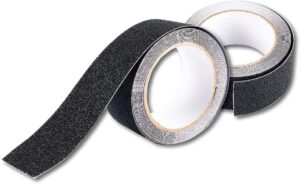
Keep all outside stairs clear of debris and hazards like ice and snow. Secure fix mats in place or use anti-slip grip tape to make surfaces less slippery.
To improve bathroom safety, secure rugs to avoid slipping and to prevent water from pooling on slick surfaces. Anti-slip stickers are a particularly good way to keep everyone in your home from slipping in the bathtub or shower.
Install safety rails like the AmazonBasics Bathroom Safety Grab Bar to help family members old and young safely get in and out of the shower. You can add more than one to provide extra support to older family members and others who need additional help.
Even a small toy can be a tripping hazard. Give the kids an easy way to stow toys and make sure every playdate ends without injury. Secure skateboards, bikes, and other mobile toys in a safe area where family members and visitors won’t trip on them.

In Australia, residential fires kill more people than all natural hazards—including bushfires. Even candles or an unattended iron can lead to accidental fires in your home, but there is a lot you can do to prevent a home fire from starting or getting out of hand.
Install fire alarms on all levels of your home, and check and change the batteries at least annually for better fire safety. Consider investing in a smart smoke detector like Google Nest Protect, which also functions as a carbon monoxide detector.
This alarm uses Wi-Fi to provide real-time updates. And you can access remote monitoring right on your smartphone or other mobile device.
If you don't want a mobile app on your smoke alarm, consider getting a non-connected model from your local electronics or hardware store.
Never leave unattended candles or use them near loose cloth like drapes or blankets. Also, make sure this fire hazard stays out of reach of children and that pets can’t knock them over.
Keep at least one fire extinguisher in your home—and check it annually to make sure it's in good working order. Keep a multi-purpose fire extinguisher handy in the kitchen or near the fireplace.
Avoid electrical fires by making sure that all appliances are in good working order and no wires are frayed. Don’t overload electrical outlets, either. In fact, it’s a smart electrical safety practice to unplug small appliances like toasters when not in use.
From a bite of dinner going down the wrong way to a young one accidentally swallowing a small item, choking is scary. Educate yourself with these safety tips about choking hazards, and take measures to keep your family safe.
Regularly inspect toys for any loose parts. Give age-appropriate toys to ensure there are no small parts. Scour floors for small toys or items where little hands might easily find them.
Be sure to keep small, hard foods like nuts or candies out of reach of children. Pay special attention at adult gatherings where children can more easily sneak something unnoticed.
Even if your child is no longer an infant, a baby monitor can still come in handy. Use this gadget to listen in for signs of choking when children are playing in another room.
For children under the age of four, always cut up hard foods that can block airways. The same applies to softer foods like grapes, cherry tomatoes, and sausage.
This one seems like a no-brainer, but unfortunately there are a number of common items with sharp edges inside and outside your home. Everything from an open bin can to a garden hoe can be dangerous.
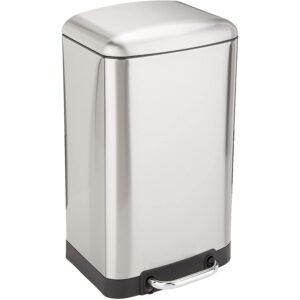
Use an automatically-closing bin to protect small fingers and pets from finding sharp edges on open food cans and lids. We suggest something like this AmazonBasics bin, an attractive solution with a soft-close lid.
Knives, graters, and peelers are common items that can lead to nasty cuts. Properly store all sharp kitchen tools and lock them up if you have small children in the home.
If you use a razor, keep it on a high shelf or lock it in a cabinet. Store extra blades in drawers with safety guards and safely stow other grooming tools like cuticle scissors as well.
Keep little ones safe from sharp points by pointing knives and forks downward in the utensil basket of the dishwasher. Place the basket away from the front of the dishwasher to make sharp objects even less accessible.
Gardening tools, including rakes, saws, and lawnmowers, can cause harm if not used and stored properly. Stay alert when using power tools, and never rush while mowing the lawn or using the weed whacker. Never leave tools lying around. Always keep them locked in a shed or garage where kids can’t access them.
Several household items present poisoning hazards, including cleaning and home maintenance supplies. However, a little diligence and poison-proofing can decrease the chance of accidental poisoning in your family.
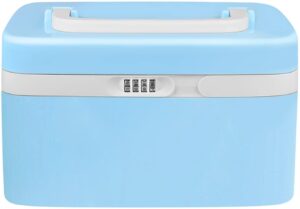
Both over-the-counter and prescription medications can prove extremely hazardous to children and teens. Dispose of all unused medications, and never leave them out on a counter. Solutions like the GBGS Combination Medicine Lock Box are a convenient way to keep medications handy without making them vulnerable to accidental discovery.
All paint needs proper storage to stay out of reach of children. Never put paint in a container other than the one it came in. Otherwise, your child may mistake it for a drink or something else.
Protect both children and pets from accidental poisoning by securing your cleaning supplies. Keep all household cleaners in a high cupboard with a safety lock to keep kids and animals from accidentally finding them. Lock up pesticides and items like turpentine in a cupboard or lockbox in the garage or shed.
Keep all makeup, hair products, soaps, and other personal products out of the reach of children and pets. Use safety latches on all doors and drawers to help keep even the most determined youngsters out.
As with all household cleaners, lock laundry and dishwasher detergents out of reach of pets and kids. If you use detergent pods, make sure children don’t mistake them for candy. Never fill the soap dispenser until you’re ready to start a load and always check your dishwasher for leftover residue after each cycle.
Cords on window dressings like blinds or curtains present a common strangling hazard to small children and infants. Here are three ways you can help make your home safer for little ones.
Keep window and electrical cords out of reach of little ones. Never place a crib or bed under a window with dangling cords. If you use an extension cord, make sure to put it away after it’s no longer needed.
To keep children from tangling themselves up, trim cords to a length that is only accessible to the adults in the home. Better yet, trade out window treatments for designs without cords.
If you’re not ready to redecorate, you can make your home safe by installing blind cord wraps to your current window coverings. Dreambaby Blind Cord Wraps are affordable, easy to install, and transparent, so they won’t clash with your decor.
Drowning isn’t only a risk when swimming or playing in water outside—it can also present a hazard in the home. Many childhood drownings occur in the bathtub, so do your part to prevent drowning with these tips.
If you use buckets for cleaning, keep them empty and away from water sources.
It only takes a few centimetres of water for a child or infant to drown, so never leave a child alone in the bathtub, and always close the toilet lid.
Keep pool safety equipment handy at all times, like a life ring and CPR chart. Fence the pool completely, lock it securely, and monitor it with gate, motion, and water break alarms.
Make sure children are always supervised by an adult when swimming and adopt a zero-tolerance policy for running or roughhousing on the pool deck.
Burns may not seem like a common household hazard, but they’re a risk whenever you use dishwashers and stoves. Thankfully, there are a few ways you can help ensure no one in your family feels the searing heat of a fresh burn.
Make sure your dishwasher latches securely at all times to prevent curious fingers from opening the door, particularly at the end of a cycle when burns from steam are most likely to occur. Add the Dreambaby Ezy-Check Swivel Appliance Lock as an extra measure to keep stop accidental dishwasher access.
To prevent burns, use the back burners on your stove when possible. This makes it more difficult for kids to accidentally touch a hot stovetop. Never rest tempting items like cookies or toys on the stovetop, even when it’s not in use.
Stoves—especially gas ones—are the perfect place for something to accidentally catch on fire. Protect your home from a potential fire by adding stove knob covers, like these from Dreambaby. They keep small hands from turning on burners or grownups from inadvertently knocking burners to the “on” position.
Nothing is more important than keeping your family safe. Knowing which precautions to take makes your job as family protector a little easier, but no one can be on duty all the time.