

The Ultimate Safety Guide for Dementia Caregivers

Why you can trust SafeWise
products considered
250+
research hours in 25+ in-home tests
10k+
years of combined experience
176+
homes and people protected
10M+

For over 13 years, SafeWise experts have conducted independent research and testing to write unbiased, human reviews (not robots). Learn more.

Cathy Habas
Apr 08, 2026
Icon Time To Read10 min read

Cathy has been researching and writing about safe aging since 2021. She holds a certificate in gerontology and is one of the internet's most knowledgeable voices in senior safety tech. Her work embodies a hands-on, empathetic approach.

People with dementia — a group of diseases affecting the brain — often feel disoriented, confused, or anxious. They have a nagging feeling that they need to go somewhere or do something, but can’t quite remember what they need to do or where they need to go.

Or, as one person with dementia said to our health expert Sally Russell, MN, CMSRN, CNE, they feel like they’re “leaving bits and pieces of themselves around but don’t know where to find them.” They end up walking around or "wandering" in an effort to find that missing information.

Wandering can lead to serious safety risks in and out of the home. But even if your loved one doesn't wander, their confusion and disorientation can lead to other unsafe situations. 

In this guide, we'll prepare you with the knowledge and tools you need to help someone with dementia stay safe. We'll also address the aggressive behavior that's sometimes seen with dementia to help you stay safe too. 



Understanding dementia safety risks

Dementia wandering can be dangerous if someone leaves the house and doesn't understand how to stay safe from traffic, bodies of water, strangers, or the elements. They may not know how to get back home or how to ask for help. There have been tragic news reports of people with dementia drowning in pools, ponds, and lakes or getting seriously ill after being lost for days without enough clothes to keep them warm. 

But even if you lock your home down tight to prevent wandering (we'll explain how to do that in a moment), dementia can still prove dangerous. A person could:

  • Turn on the stove or oven and walk away, leading to a house fire
  • Take medication they don't need or have already taken, leading to possible overdose or other serious side effects
  • Use heated tools (like curling irons or clothes irons) in unsafe ways, leading to burns, shocks, or fires
  • Try to lift things that are too heavy, leading to injury
  • Try to use power tools to "fix" things, leading to injury
  • Fall while pacing around the house, leading to injury

Protecting your loved one requires dementia-proofing the house and supervising them at all times. In the next few sections, we'll suggest tips and tools to make this easier.


How to make a safe space for wandering

Wandering is a compulsive behavior. Although medication can sometimes help, your loved one may continue to pace around the house. Here's how to minimize safety risks while allowing your loved one the freedom to wander. 

1. Make sure they’re comfortable

Your loved one may feel like pacing or roaming when they’re hungry, in pain, or aren’t sure what they’re supposed to be doing. Make sure they’re comfortable in every way possible and redirect their attention to an activity they enjoy, like working on a jigsaw puzzle, flipping through magazines, or watching TV.

2. Clear a path

Arrange furniture in a way that forms a clear walking path. Keep clutter off the floor, and watch for trip hazards like rumpled rugs. These simple steps can help prevent falls. If your loved one's doctor says they're at a high risk of falling, you may also want to make sure they wear comfortable, non-slip shoes. 

3. Camouflage doors

If a door doesn’t look like a door, someone with dementia is unlikely to open it. You can paint the door the same color as the wall so it doesn’t stand out. Remember to paint the doorknob (taking care to not paint it shut) or cover it with contact paper in the same color.

You can also buy door-sized decals that look like bookshelves or murals.

4. Replace “go” cues with reorienting cues

The Alzheimer’s Association recommends hiding anything that could make a person think about leaving the house. Keep shoes, jackets, hats, purses, or keys out of sight—even if they belong to visitors.

Instead, make sure there are plenty of signs that explain what to do in each room. Even a simple sign that says “Living Room” can help, as can other signs like “Read Magazines” or “Watch TV.”

5. Lock doors and place locks above eye level

If there’s a door that your loved one really shouldn’t open — like an exterior door or a closet where chemicals are stored — lock it. Place the lock near the top of the door, where it's unlikely to catch their attention. If they don't see it, they won't try to fiddle with it.

If it's safe for your loved one to go into the backyard, make sure it has a sturdy fence and a locked gate. 

Never lock someone with dementia in their home without a caregiver. 

6. Use stop signs

People with dementia usually respond to directional signs, including stop signs. Place the sign on a ribbon and string it across an entryway for an easy blockade. 

7. Install gates

A simple baby gate latch may be too complicated for people with dementia to navigate. Install gates at the top and bottom of stairs or in the kitchen doorway to prevent them from roaming into an unsafe area.

Your loved one still needs supervision around a gate since they can injure themselves trying to climb over it.

8. Use alarms

It's impossible to keep an eye on someone with dementia at all times. As a caregiver, you may need to go to the bathroom or step into the kitchen to prep a meal. But it only takes a second for someone to get out of the house. Alarms instantly tell you something's wrong.  

There are many types of alarms:

  • Bed exit alarms
  • Chair exit alarms
  • Floor mat alarms (placed in doorways)
  • Motion sensors
  • Door chimes
  • Distance sensors

We'll share some of our favorites in the next section.


Essential safety tools for dementia caregivers

Everyday home security and safety products may not work well for people with dementia. They aren't likely to realize they can press a button for help, and loud sirens can be upsetting. 

Below, we'll take a look at safety devices designed for the unique needs of people with dementia. 

Door chimes and motion sensors

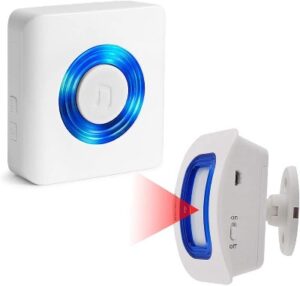
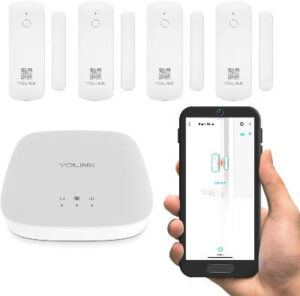
Locking and camouflaging a door may stop a person with dementia most of the time — but there's still a chance they'll figure out how to open the door. You need a back-up plan. Door chimes and motion sensors immediately sound an alarm to let you know someone has entered an off-limits area.

The best door chimes for people with dementia connect to a pager, not a mobile app. If your phone is on silent, you might miss the notification.

It's also a good idea to avoid sensors that make noise directly (without a pager). People with dementia can be sensitive to noises and may feel frightened or agitated when an alarm goes off right next to them.

Door chimes can protect interior and exterior doors, as well as cabinets and closets. Motion sensors work well for hallways, staircases, or openings between rooms. You might even put a motion sensor by an exterior door so that you know when your loved one may be trying the lock, or by the bed so you know when they get up.

These devices are usually battery-powered and easy to install yourself. Here are some of our favorites:

  • SMPL Alerts: Features a pager that's compatible with door sensors, motion sensors, and two types of call buttons.
  • Evernary: Motion sensors that connect to a portable pager
  • YoLink: Door chimes that connect only to a mobile app; Comes with a Wi-Fi hub to power the chimes
  • Stechro: Budget-friendly door chimes featuring a pager that plugs into the wall

*Amazon.com price current as of publish date. Read full disclaimer.

Bed alarms

Some people with dementia wander at night. Knowing exactly when they get out of bed allows you to supervise and redirect the behavior. 

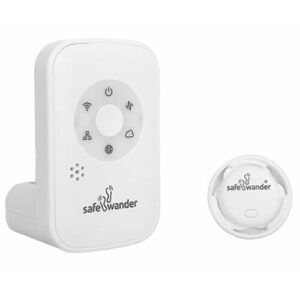
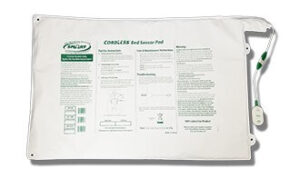
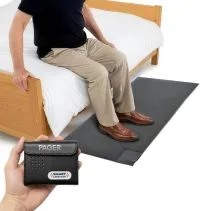
Most bed alarms consist of a pressure-sensing pad that fits under the bed sheets and a separate pager that alerts caregivers. SafeWander makes a unique device that pins to your loved one's pajamas and communicates with a receiver near the bed.

We recommend avoiding alarms that don't discreetly page caregivers. Some only sound a loud alarm, which can be startling to someone with dementia. They may not understand what the alarm is for, and this can be disorienting and upsetting.

Some of our favorite options include:

  • The Lunderg mattress pad: Provides the fastest alerts with minimal false alarms
  • SafeWander: A wearable device for people who may feel uncomfortable lying on a pad
  • Smart Caregiver Corporation Bed Alarm: Features a pager with visual alerts, language options, and volume control.

Other options include placing a motion sensor in the bedroom or a pressure mat on the floor by the bed. 

Product
Price
Pad size
Batteries included
Signal range
Learn more
33x10 in.
Icon Yes  LightYes
400 ft.
N/A
Icon Yes  LightYes
Unlimited
30x10 in.
Icon No  LightNo
150 ft.

*Amazon.com price current as of publish date. Read full disclaimer.

Pressure mats

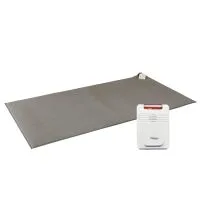
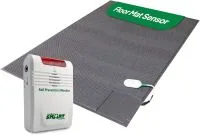
Pressure mats can be used in place of motion sensors and bed alarms. Set them in front of exit doors, at the side of the bed, in front of baby gates, or on the other side of a "stop" sign so you know when someone may need supervision.

Pressure mats tend to be a more expensive option compared to door chimes and motion sensors. They may also create a trip hazard for some people. However, they can serve as an early warning system for home exits.

Our favorite options come from the Smart Caregiver Corporation. This company also sells motion sensors and bed alarms so you can cut down on the number of pagers you carry around. 

Product
Price
Pad size
Mat power source
Pager
Learn more
24x48 in.BatteriesPortable
24x48 in.BatteriesPortable or wired
24x36 in.BatteriesPortable

*Amazon.com price current as of publish date. Read full disclaimer.

GPS trackers

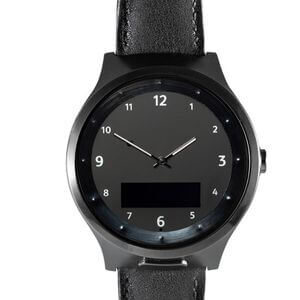
GPS trackers represent the final layer of safety for people with dementia. They shouldn't be the only tool you rely on, but GPS trackers can offer critical location information if your loved one wanders away from home. 

The best GPS trackers for dementia can't be easily removed. Your loved one may feel confused about why they're wearing a watch they don't recognize, or why something is dangling around their neck. They may discard this tech at any time, making it completely useless.

So, it's important to look for devices that can be locked onto the wearer's wrist or clothes. Some trackers are embedded into special shoe soles for maximum discretion. However, there's always a chance someone will leave the house without their shoes on, or that they'll remove any clothes holding the tracker.

Some GPS devices feature geofencing, which notifies you when someone crosses a virtual boundary. However, this technology isn't reliable enough to protect people with dementia. (Learn more about the pros and cons of geofencing.)  

Check the table below for our top picks: 

Swipe right on mobile to see full table.

Product
Best for
Lowest monthly price
Battery life
Learn more
Best overall

$44.95*

7 days

Professional monitoring pick

$39.95

5 days

Best wear options

$44.99**

24 hours

Best for budgets

$29.97

24 hours

*$44.95 monthly price with annual plan, paid in advance. Month-to-month service starts at $54.95.

**$44.99 monthly price with annual plan, paid in advance. Month-to-month service starts at $64.99/mo., and a monthly plan with a one-year contract starts at $49.99/mo.

All pricing including Amazon.com price as of post date. Read full disclaimer

How to create an emergency plan for someone who wanders

Despite your best efforts, your loved one may wander out the door one day. Or, you may take them to a doctor's appointment or on a fun outing and find that they wandered off while you looked away for a minute. Having a plan for these scenarios allows you to act quickly to find your loved one. 

  1. Get a GPS tracker: Get a GPS tracker designed for people with dementia. Test it regularly. We like Tranquil Watch because it has a locking strap, a useful home exit alarm, and a one-week battery life. 
  2. Get a medical ID bracelet: Buy a medical ID bracelet so Good Samaritans know who to call if they encounter your disoriented loved one. Consider one that uses a special two-handed clasp, like these from Medical ID Fashions, so that it's difficult for your loved one to remove. 
  3. Plan ahead: Come up with a preventive plan for public outings. Consider asking another person to go with you so there's always someone watching your loved one. Never leave someone with dementia alone in a car.
  4. Learn about Silver Alerts: Contact your local police department and learn the procedure for filing a Silver Alert or similar report. Keep the police department's phone number in your contacts.
  5. Keep updated photos: You may need to share photos of your loved one with the police. Make sure you have up-to-date ones on your phone.
  6. Talk to trusted neighbors: Let them know your loved one has dementia and to call you immediately if they're spotted alone. 
  7. Consider outdoor security camerasFootage can show which direction they traveled in and what they were wearing at the time. This is useful information for search teams. 

How to handle aggressive dementia behavior

Some people with dementia ocassionally act aggressive. This can be scary to deal with as a caregiver. If it happens a lot and you feel unsafe, it's okay to consider other care situations. Transitioning your loved one to a dementia care facility doesn't mean you've failed them. It just means they can get better support elsewhere. 

If you haven't reached that point yet, it helps to understand why the aggression happens, what you can do about it, and what to do if you feel threatened. 

Where is this aggression coming from?

Sometimes people with dementia act aggressive because they're struggling to communicate their needs. Aggressive behavior may be traced back to all kinds of things, such as:

  • Lack of sleep
  • Pain
  • Stress
  • Depression
  • Changes in environment or routine
  • Sensory overload, like too much activity in the room or too many loud noises
  • Being asked to do something they don't remember how to do
  • Drug interactions
  • Drug side effects
  • Loneliness 
  • Constipation

Sometimes aggression only occurs in the evening or at night. This is known as sundowning, or sundown syndrome. People who experience sundowning may also wander a lot more at night, follow you around, and struggle to fall sleep. Sundowning usually means the part of the brain responsible for circadian rhythm (our sleep-wake cycle) has been damaged as dementia progresses. 

It's important not to take the aggression personally. Your loved one — the person behind the dementia — doesn't hate you or truly wish you harm. Certain parts of their brain have died, making it tough for them to stay rational and logical when something's wrong.

Reducing aggressive behavior

Aggression may be prevented or reduced by:

  • Sticking to a routine
  • Creating a calm and quiet environment
  • Redirecting the person to a specific activity
  • Starting or changing certain medications

Staying calm despite your loved one's agitation can also help diffuse the situation. Try to figure out what's triggering the agitation, then address it. 

What to do when things escalate

There may be times when you need to focus on keeping yourself safe.

  • Once someone with dementia demonstrates aggression, lock up anything that could be used as a weapon, including knives.
  • During an aggressive encounter, focus on maintaining distance between you and your loved one.
  • Call 911 if you need help around someone who has become violent. Explain right away that they have dementia so that the officers can plan an appropriate response.

Some people don't want to call the police during a dementia emergency because they worry the police may use excessive or deadly force. However, many police departments have been trained to help people with dementia.

Call your local police station to learn more about their response procedures. What training have they received? Will they automatically take your loved one to the hospital? Do they ever file charges against people with dementia, and if so, why? 

FAQ

Wandering occurs in mid- to late-stage dementia.

Dementia wandering doesn’t progress in a linear fashion. Everyone diagnosed with dementia is at risk for wandering.

That said, the Alzheimer’s Association suggests people may wander if they talk about certain activities:

  • “Going home” when they’re already home
  • Going to work when they no longer work
  • Visiting friends or family members who have passed on

Getting anxious in new places and forgetting how to drive home are two other signs your loved one may wander in the future.

Restraints and sedation are considered old-fashioned techniques that, according to health expert Sally Russell, MN, CMSRN, CNE, offer convenience to the caregivers but do not improve the patient’s quality of life. It’s too easy for these tactics to cross over into abuse.

If you’re struggling to keep a loved one with dementia safe, talk to their doctor to come up with a solution. It may be time to hire an in-home caregiver or consider a nursing home.

Final word: Dementia creates unique but manageable safety challenges

People with dementia don't realize that certain things aren't safe anymore, and they can feel frustrated when they lose their freedom. Memory issues may cause them to relive this frustration over and over.

As a caregiver, you need ways to protect them both physically and emotionally. While the emotional side of things is a bit outside our scope, we know all about physical protection. We recommend starting with a series of door chimes and motion sensors, a GPS tracker, and perhaps an outdoor camera. Simple home modifications can also help your loved one stay out of harm's way. 


Disclaimers

*Product prices and availability are accurate as of the date/time indicated and are subject to change. Any price and availability information displayed on Amazon at the time of purchase will apply to the purchase of this product. Safewise.com utilizes paid Amazon links.

Certain content that appears on this site comes from Amazon. This content is provided “as is” and is subject to change or removal at any time.

Cathy Habas
Written by
With over 12 years of experience as a content writer, Cathy has a knack for untangling complex information. Her natural curiosity and ability to empathize help Cathy offer insightful, friendly advice. She believes in empowering readers who may not feel confident about a purchase, project, or topic. Cathy earned her Bachelor of Arts degree in English from Indiana University Southeast and began her professional writing career immediately after graduation. She is a certified Safe Sleep Ambassador and has contributed to sites like Safety.com, Reviews.com, Hunker, and Thumbtack. Cathy’s pride and joy is her Appaloosa “Chacos.” She also likes to crochet while watching stand-up comedy specials on Netflix.

Recent Articles

older-hispanic-couple-hiking
The Best Fall Detection Devices
Find the best medical alert systems with fall detection. Compare equipment, price, accuracy, customer reviews,...
A teenager sitting in a bedroom at night, looking at a smartphone with multiple notification icons floating above.
Jury Finds Meta and YouTube Negligent in Landmark Social Media Addiction Case
Meta and YouTube were found negligent in a landmark addiction case. Here’s why it matters...
How Safe Are the Fastest-Growing U.S. Cities?
Does a surge in population lead to a surge in crime? Find out in our...
Package Theft and Cybercrime Are Now the Most Common Crimes in America
State of Safety data shows Americans are more likely to experience package theft and cybercrime...