


What to Do If You’re Caught in a Flash Flood, and How to Know When to Leave

Why you can trust SafeWise
products considered
250+
research hours in 25+ in-home tests
10k+
years of combined experience
176+
homes and people protected
10M+

For over 13 years, SafeWise experts have conducted independent research and testing to write unbiased, human reviews (not robots). Learn more.

SafeWise Team
Jul 04, 2026
Icon Time To Read4 min read

Flash floods do not leave much room for debate. Water can rise quickly, roads can disappear under it, and the safest choice often has to happen before the situation looks extreme.

That is why good flash flood safety tips are less about memorizing every weather term and more about knowing which decisions matter first.

SafeWise's 2026 State of Safety research found that more than half of Americans are concerned about extreme weather and natural disasters—the highest level of concern SafeWise has seen for this matter.

For flooding, that concern needs to turn into a simple plan: know the alert, know your route, and never try to cross floodwater.
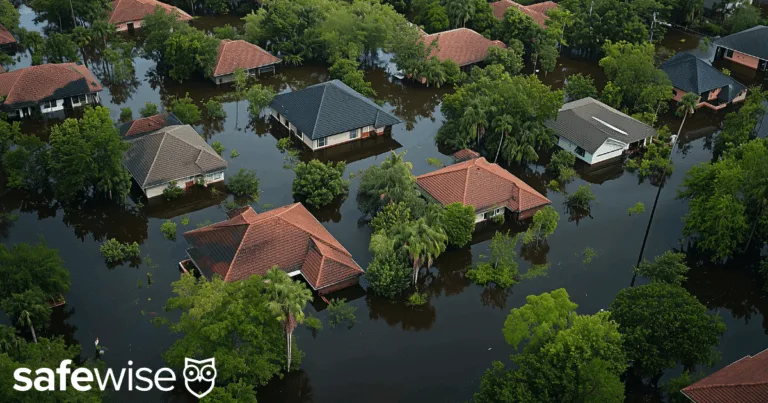
Flooded town

Image credit: SafeWise

Move higher and stay out of floodwater

If you are wondering what to do in a flash flood, start with this: move to higher ground, avoid floodwater, follow official alerts, and do not drive through a flooded road.

If officials tell you to evacuate, leave right away. If water is already rising near you and the route is still clear, move before the route closes.

Flooding is one of the deadliest weather hazards in the U.S., according to the CDC, mostly because of drowning. The National Weather Service's core message applies anywhere: Turn Around, Don't Drown.

Know what each flood alert actually means

The simplest flash flood warning vs watch distinction is this: a watch means prepare, and a warning means act.

The National Weather Service says a Flood Watch means conditions are favorable for flooding. Use that time to charge your phone, review your route, move important items if there is time, and be ready to leave.

A Flood Warning means flooding is imminent or already happening. A Flash Flood Warning means a flash flood is imminent or occurring, and people in flood-prone areas should move immediately to higher ground. A Flash Flood Emergency is rarer and more urgent. It signals a catastrophic, life-threatening flash flood situation where immediate action is needed.

Do not wait for every alert to arrive in order. Flash floods can develop in minutes and can happen where it is not raining. If you see rising water or know you are in a low-lying area, act early.

Treat every flooded road as closed

The road decision is the most important one in this article: never drive into floodwater. Not if the road looks familiar. Not if the water looks shallow. Not if another car made it across.

More than half of flood-related drownings happen when a vehicle is driven into hazardous floodwater. Six inches of fast-moving water can knock over an adult.

Twelve inches of rushing water can carry away most cars, and two feet can carry away SUVs and trucks. The road may also be washed out below water that looks shallow from a driver's seat.

For driving in flood water safety, the rules are not about how to drive through it. The rule is not to enter flood water at all. Do not drive around barricades, and do not follow another driver across.

If rising water surrounds your vehicle and you can get out safely, leave the vehicle and move to higher ground. If moving water traps you, move to the highest point you can reach and call 911 if possible.

Move up fast if you are outside

Flash floods are especially dangerous outdoors because the water may come from rain that fell miles away. A clear sky over your campsite or trail does not mean conditions are safe upstream.

If you are hiking, camping, or driving through desert terrain, stay out of canyons, arroyos, washes, creek beds, and low-water crossings when heavy rain is possible nearby.

If you hear a roar upstream, see muddy water rising, or notice a sudden change in water level, move higher immediately. Check forecasts for the whole drainage area before you enter, not only the trailhead.

At home, prepare to leave before roads close

Flood safety at home starts before rain reaches your street. Look up your flood zone through the FEMA Flood Map Service Center, know which roads flood first, and choose at least two routes to higher ground.

A flash flood evacuation works best when you leave before low spots and bridges are covered. During a Flood Watch, charge phones, gather medications, put important documents in a waterproof bag, and move pets and supplies near the door.

If you have time and can do it safely, move electronics and valuables to a higher floor.

During a warning, do not spend precious minutes protecting belongings if the safer move is to leave.

Ready.gov says to evacuate if told to do so and to move to higher ground or a higher floor depending on the flooding. If water is already moving across your yard, driveway, or street, do not walk through it to reach a car.

If you are trapped in a building, go to the highest safe level and call for help. Avoid basements and rooms where water covers outlets or cords. After the water recedes, wait for officials to say it is safe to return.

When it is safe to reenter, document damage with photos and video before cleanup begins. That record can help with insurance claims and repairs.

Build the plan before the warning

Flash flood preparation should be simple enough to follow under pressure. Sign up for local weather alerts, keep Wireless Emergency Alerts turned on, and know where you would go if you needed higher ground quickly.

Pack a small go bag with water, medications, copies of key documents, a flashlight, first aid supplies, pet items, a phone charger, and a backup battery. SafeWise's personal safety resources can also help you think through everyday items that support an emergency plan.

The goal is not to predict every possible flood scenario. The goal is to remove slow decisions. Everyone in the household should know which alerts mean prepare, which alerts mean act, where the higher-ground route is, and why no flooded road is worth testing.

The first safe choice is usually the early one

Flash floods move faster than most people expect, so the safest decisions are often the early ones: leave when told, move higher when water starts rising, and turn around before the road becomes a question.

You do not have to know how deep the water is to make the right call. If water covers the road, path, or crossing, treat it as unsafe. Flash flood safety starts with one rule that does not change: stay out of floodwater, and get to higher ground before your options narrow.

SafeWise Team
Written by
The SafeWise Team is here to help you keep your home and family safe. Whether you’re looking to pick a security system or identify and remove common risks in your home, we’re here to help you find the best products and well-researched answers. At SafeWise we combine our years of experience in home safety and security with user reviews and feedback to help take the guesswork out of living safe.

Recent Articles

woman checking on home security system via app on smartphone
The Best Alexa-Compatible Home Security Systems
Best for built-in integration ADT Voice control of ADT system Works with Alexa Guard View...
Vivint App: A Complete Guide to Features and Use
Tour the Vivint app and discover its features, navigation, and customization capabilities. Learn how to...
dangerous apps for kids
Dangerous Apps for Kids: What Parents Need to Know in 2026
Dangerous apps for kids include ones you’ve heard of (TikTok, Instagram) and some new arrivals....
Map showing location pins for the city in each state with the highest burglary rate.
The Most Burglarized City in Every State
We found the most-burglarized city in every state — it looks like burglars are equal...