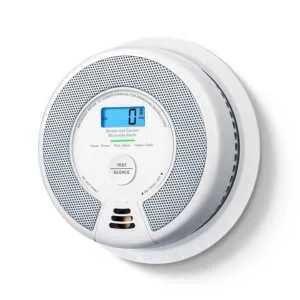
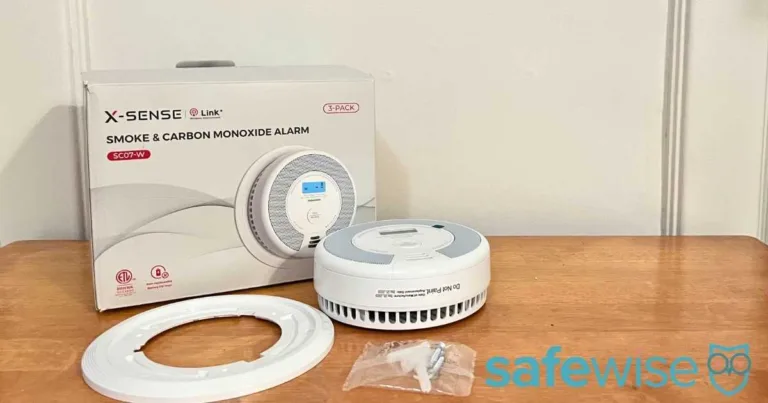
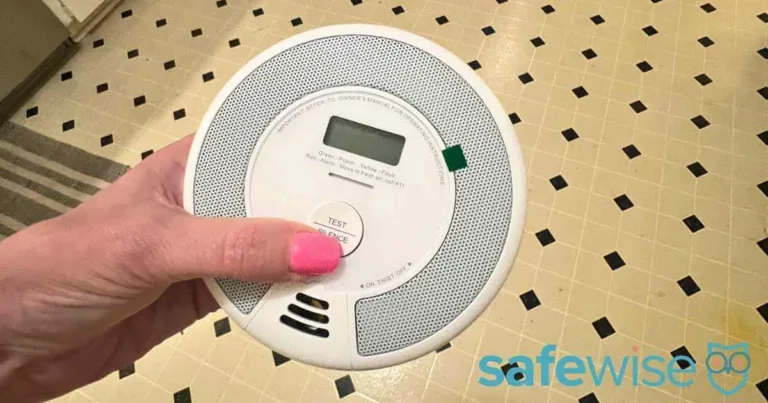
We love that The SC07-W combines a photoelectric smoke sensor with an electrochemical CO sensor in a single ceiling-mounted unit. Photoelectric detection is particularly good at catching slow, smoldering fires — the kind that build gradually, with a lot of smoke before flames appear — while the electrochemical CO sensor monitors for dangerous gas levels continuously.
I like the LCD display that makes it easy to check the status with just a glance:
- Green means everything is fine
- Yellow indicates an early warning or low battery
- Red means the alarm has been triggered
Features like this are convenient for someone like me, but if you or someone in your home has impaired hearing, visual alert systems like this can save a life. The display also shows real-time CO readings in parts per million, so you can check in on CO levels without waiting for the alarm threshold to be crossed.
Carbon monoxide sensitivity is designed to pick up dangerous levels and buildup before they become life-threatening. Here's a breakdown of the CO alarm triggers:
- Triggering at 70 ppm over 60–240 minutes
- Triggering at 150 ppm over 10–50 minutes
- Triggering at 400 ppm within 4–15 minutes
Those alarm response times line up with UL 217 standards for combo alarms. If the CO levels trigger the alarm, you'll see a blue backlight where the CO concentration is displayed.
Finally, the alarm's housing is made from fire-retardant ABS plastic, which means the alarm keeps sounding even if flames reach it directly — an important detail that cheaper detectors often skip.
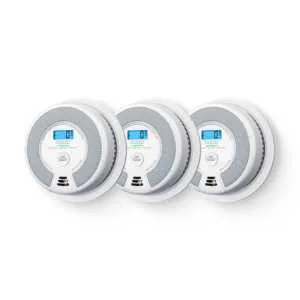
The SC07-W's standout feature is its ability to link up to 24 X-Sense wireless alarms into a single network with a transmission range of over 820 feet in open air. When one alarm detects smoke or CO, all linked alarms sound simultaneously — so whether the danger starts in the basement, garage, or a back bedroom, everyone in the house hears the warning at the same time.
This matters most in larger homes, homes with multiple stories, or any layout where a single alarm in one room might not be heard elsewhere. Several customers who bought the 6-pack specifically mention that the master bedroom being far from kids' rooms was their main motivation — and that the interconnect helped them sleep better at night.
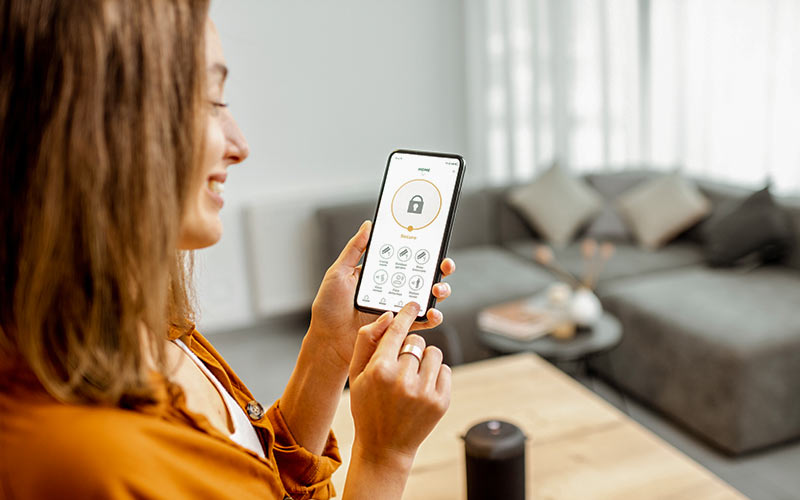
The wireless setup uses an 868 MHz radio frequency and is compatible only with other X-Sense wireless alarms. You don't have to connect it to Wi-Fi (it isn't Wi-Fi-compatible), making it a simple, low-tech option that eliminates worry about outages. But that also means you can't connect it to a smart home hub or use voice control with an assistant like Amazon Alexa or Google Home.





 5 min read








 Your Privacy Choices
