

How Long Do Most Burglaries Take? The Answer Changes How You Think About Security

Why you can trust SafeWise
products considered
250+
research hours in 25+ in-home tests
10k+
years of combined experience
176+
homes and people protected
10M+

For over 13 years, SafeWise experts have conducted independent research and testing to write unbiased, human reviews (not robots). Learn more.

Cherif A.
Jul 09, 2026
Icon Time To Read3 min read
Icon CheckEdited ByKit Smith

Many people think about home security as what happens after a problem starts, like when an alarm goes off, a phone alert pops up, or the police are called.

But the timing of a burglary changes what security needs to do.

So, how long does a burglary take? A UNC Charlotte study of incarcerated burglars found that most burglaries lasted less than 10 minutes, though some lasted more than an hour.

Good security is not just about getting help after a break-in starts. It is about making your home look less appealing, harder to enter, and tougher to move through quickly.
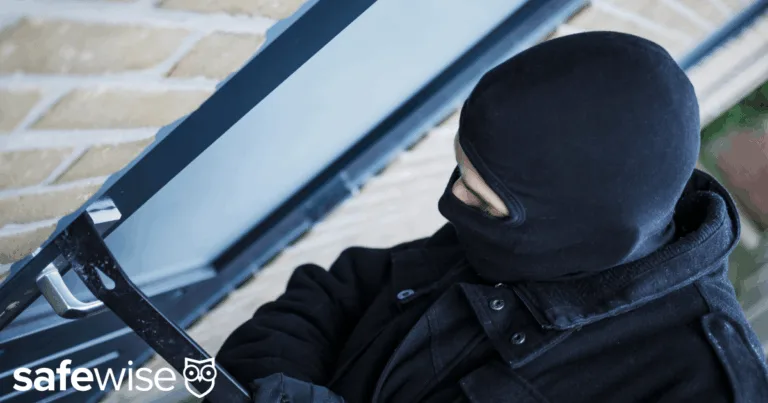

Burglar trying to pry open a door

Image: SafeWise

Most burglaries are over faster than you think

The average time for a break-in is not fixed. It depends on the home, the person breaking in, how easy the entry point is, and whether anything makes them feel exposed. A quick break-in through an unlocked side door may be over in minutes. A planned burglary in a quiet area may take longer.

For everyday home security, the takeaway is simple: many burglars do not want to linger. They want to get in, find easy-to-grab items, and leave before neighbors, cameras, alarms, dogs, or homeowners make the situation riskier.

Why burglars work so fast

If you are wondering how fast burglars work, the answer often comes down to risk.

The longer someone stays inside, the greater the chance that something will go wrong. A neighbor might notice a strange car. A dog might bark. A camera might catch a face or license plate. Someone might come home. An alarm might trigger.

Entry matters too. The FBI’s 2019 burglary data found that 55.7% of reported burglary offenses involved forcible entry, while 37.8% were unlawful entries without force.

Why deterrence matters more than response alone

A short burglary window does not mean alarms, monitoring, or police response are useless. It means they are part of the setup, not the whole plan.

Home security system response time matters. A fast alert can help you call for help, check cameras, warn a neighbor, or document what happened. But, since many burglaries are over in under 10 minutes, the first layer has to work earlier.

That is where deterrence and delay come in.

“Deterrence” home security efforts help make another house look easier than yours. “Delay” makes entry take longer, louder, or more frustrating. Cameras help document what happened if someone still tries.

How to slow down a burglar before entry

If you want to know how to slow down a burglar, start with the places they are most likely to test first: doors, windows, side gates, garages, and sliding doors.

A few small upgrades can make forced entry take longer:

  • Use deadbolts on exterior doors.
  • Reinforce strike plates with longer screws.
  • Check that door frames are solid.
  • Lock first-floor windows and basement windows.
  • Add a security bar or rod to sliding doors.
  • Keep garage doors closed, even when you are home.

These steps do not turn your home into a fortress. That is not the point. The point is to make forced entry harder.

Make your home look watched before anyone gets close

Visible deterrents help answer a question before the person reaches the door: is this house worth the risk?

Start with what someone can see from the street or sidewalk. Motion lights near side doors, a video doorbell, a visible outdoor camera, trimmed landscaping, and a locked gate all send small signals that the home is not an easy target.

Inside the home, think about what is visible from windows. Laptops, car keys, wallets, and jewelry near entry points are easy to grab quickly. Moving those items out of sight does not stop a burglary by itself, but it removes the obvious reward.

Use timers or smart lights when you are away. Keep mail and packages from piling up. Ask a trusted neighbor to keep an eye out if you are traveling.

What to prioritize if you only do a few things

If this statistic makes you rethink your setup, do not start by buying everything at once. Start with the weak spots that make a fast break-in easier.

First, walk around your home like someone looking for a quick entry point. Are any doors hidden from the street? Are windows unlocked? Is the garage remote visible inside a car? Does a sliding door have only its standard latch? Are expensive items visible through windows?

Then focus on five practical changes:

  • Strengthen the main entry points.
  • Add lighting where someone could approach unseen.
  • Make the camera or doorbell visible.
  • Keep valuables away from easy view.
  • Use alerts that reach you quickly.

Those steps address the short-window reality without turning home security into an all-or-nothing project.

The real lesson from a fast burglary

The fact that many burglars happen in 10 minutes or less is not a reason to feel helpless. It’s a reason to focus your security decisions on the right things.

If many burglaries are over before anyone can respond, the best setup is one that starts working earlier. Make your home look less appealing before entry, make doors and windows harder to force, and keep alerts or cameras in place to document what happens if someone still tries.

Response matters. But it is not the whole answer.

The stronger strategy is deterrence, delay, and documentation working together. That way, your home is not just reacting to a break-in. It is making it harder to start one.

Cherif A.
Written by
Cherif A. is an SEO content strategist and blog writer. His writing covers consumer-focused subjects such as home safety, personal security, digital tools, smart home technology, and everyday preparedness. Drawing on a research-first approach, Cherif aims to make safety and technology topics feel accessible without oversimplifying them. When he’s not writing, Cherif enjoys following digital trends and studying what makes online content genuinely helpful for readers.

Recent Articles

Technician installing a smoke alarm
Best Smoke Detectors of 2026
We reviewed the top fire and smoke alarms for your home in 2026. Protect your...
woman checking on home security system via app on smartphone
The Best Alexa-Compatible Home Security Systems
Best for built-in integration ADT Voice control of ADT system Works with Alexa Guard View...
Vivint App: A Complete Guide to Features and Use
Tour the Vivint app and discover its features, navigation, and customization capabilities. Learn how to...
dangerous apps for kids
Dangerous Apps for Kids: What Parents Need to Know in 2026
Dangerous apps for kids include ones you’ve heard of (TikTok, Instagram) and some new arrivals....