

If you're comparing motion sensor lights vs security cameras, the choice isn't as complicated as it may seem. Both can make your property feel more secure. Both are common recommendations from security experts. And both can play an important role in a layered security setup.
Motion Sensor Lights vs. Cameras: What’s Actually Worth Installing First
Why you can trust SafeWise
products considered
250+
research hours in 25+ in-home tests
10k+
years of combined experience
176+
homes and people protected
10M+
For over 13 years, SafeWise experts have conducted independent research and testing to write unbiased, human reviews (not robots). Learn more.

 4 min read
 Edited ByKit Smith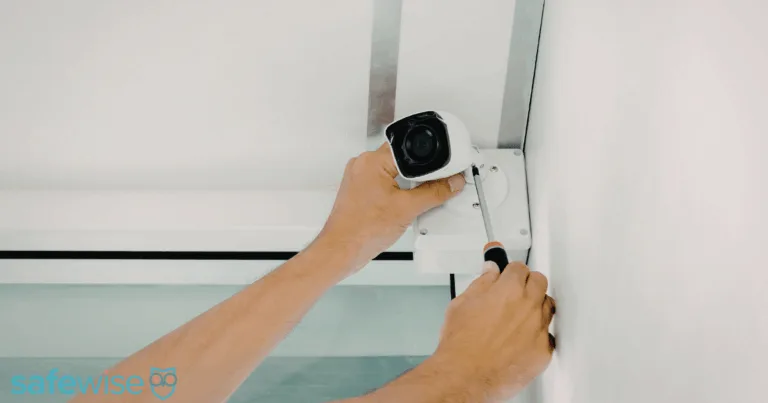
Image: SafeWise
Quick answer
For many households, motion sensor lights are the best first home security upgrade because they combine affordability, simplicity, and deterrence.
They're typically less expensive than security cameras, don't require subscriptions, and create an immediate deterrent effect by removing the darkness that opportunistic intruders often rely on. Unlike cameras, they don't depend on someone checking footage or responding to alerts to be useful.
That doesn't mean cameras aren't valuable. They absolutely are. But if you're choosing between the two as your first security upgrade, motion sensor lighting often delivers more protection per dollar spent.
Do motion sensor lights deter burglars better than cameras?
When people ask this question, they're usually asking about prevention rather than evidence. This is where lighting has an advantage.
Research on environmental design and crime prevention has consistently found links between improved lighting and lower crime rates in many settings. Police data have found reductions in crime where lighting improvements were introduced, although lighting alone is not a guarantee against burglary.
What motion sensor lights actually do
Motion sensor lights don't record anything. They don't send alerts. They don't identify suspects. What they do is immediately expose activity around your property.
A person approaching a dark side yard, driveway, or back entrance suddenly finds themselves standing in a brightly lit area. Now they can be seen by neighbors, passing drivers, or the homeowner. It also creates uncertainty. The intruder can't immediately tell whether the light is connected to a single camera or a complete home security system.
Motion lights also offer practical advantages for both homeowners and renters:
- Low upfront cost
- No monthly fees
- Minimal maintenance
- Available in solar-powered and battery-powered options
- Simple installation in many situations
Perhaps most importantly, motion lights work automatically. Nobody has to review footage or answer an alert for the light to do its job.
Should I get a security camera or motion lights first?
For most households, motion sensor lights are the better first purchase.
They're affordable, easy to install, and effective around common entry points. Lighting is the stronger foundation for a new security setup, while cameras add valuable visibility and documentation.
What cameras actually do
While lighting focuses on deterrence, security cameras focus on documentation and awareness. A camera can show you real-time events and record what happened. This is useful for insurance claims and police reports.
Aside from giving homeowners real-time visibility into their property, modern smart cameras can also send alerts when motion is detected and allow remote viewing through a mobile app.
Visible cameras may deter some criminals as well, particularly when they're clearly positioned near entry points. However, deterrence varies depending on the situation, and cameras don't physically change the environment the way lighting does.
There's also a practical limitation many first-time buyers overlook: cameras often create work. With cameras, you'll need to do the following:
- Review notifications
- Check recordings
- Manage storage
- Maintain batteries or power sources
- Potentially pay subscription fees for cloud storage
And if a camera is pointed at a poorly lit area, the footage may be less useful than expected. In this case, you’ll also need to buy and install lighting. That's why cameras are often strongest as a second layer of security rather than the first.
Do motion sensor lights deter burglars better than cameras?
In many situations, yes. Motion lights directly remove one of the factors opportunistic intruders often prefer: darkness and concealment. When a light suddenly activates, it can make an intruder feel exposed and easier to spot.
Cameras, by contrast, may or may not be noticed. Even when they are visible, they primarily create the possibility of identification later. That's why many security professionals recommend treating lighting as prevention and cameras as documentation.
The strongest setup uses both motion sensor lights and cameras. But if you're choosing only one today, lighting typically delivers the more immediate security benefit.
What is the cheapest effective home security upgrade?
For most homes, motion sensor lighting is one of the cheapest and most effective upgrades available. For homeowners or renters focused on home security on a budget, motion lighting is often the easiest place to start.
A basic motion light can cost significantly less than a camera system, requires little ongoing attention, and can cover large areas such as driveways, walkways, side yards, and back entrances. It's also renter-friendly. Many battery-powered and solar-powered options can be installed without major modifications to the property.
When you want both motion sensor lights and a camera—and how to layer them
The comparison between cameras and lights can be misleading because the best security setups don't force you to choose between one or the other. They work best together.
Motion lights help discourage suspicious activity before it escalates. Cameras help you understand and document what happens if someone approaches your property.
Once you notice your motion sensor lights activate, you can see why through your camera. And cameras become more effective when paired with good lighting.
With both, you have visibility. Lighting helps a camera do its job of capturing useful footage at night. A camera watching a dark corner can only do so much. A camera watching a well-lit area has a much better chance of recording usable details.
If your budget allows for only one combined solution, a motion-activated floodlight camera can be a practical compromise for a primary entry point. These devices provide illumination, recording, and alerts in a single unit.
Renters should also verify what installation methods are allowed before purchasing either type of device.
Motion sensor lights vs. cameras
If you're deciding between a security camera vs. motion light as your first purchase, start with motion sensor lights at your main entry points. They're affordable, easy to install, require little maintenance, and create an immediate deterrent effect by eliminating the cover of darkness around your home.
Add cameras when you want visibility, alerts, and documentation, but don't think of them as a replacement for good lighting.
Both motion sensor lights and security cameras have a place in a solid home security strategy. The difference is that they solve different problems. Lights help discourage unwanted activity before it happens. Cameras help document and monitor what happens after someone enters the scene.
Together, good lighting and cameras secure entry points and add visible security measures, making them some of the most effective outdoor home security basics.

Recent Articles
Best Smoke Detectors of 2026
We reviewed the top fire and smoke alarms for your home in 2026. Protect your...
The Best Alexa-Compatible Home Security Systems
Best for built-in integration ADT Voice control of ADT system Works with Alexa Guard View...

Vivint App: A Complete Guide to Features and Use
Tour the Vivint app and discover its features, navigation, and customization capabilities. Learn how to...

Dangerous Apps for Kids: What Parents Need to Know in 2026
Dangerous apps for kids include ones you’ve heard of (TikTok, Instagram) and some new arrivals....


 Your Privacy Choices
