

Most people assume burglars are drawn to visible wealth — a nice car in the driveway, an expensive neighborhood, or flashy jewelry in the window. But research tells a very different story. A landmark study published in the Journal of Research in Crime and Delinquency found that 83% of burglars choose targets based on opportunity, not value, prioritizing homes that are easy to enter and low-risk to escape. They aren't hunting for diamonds first. They're hunting for a quick, unseen in-and-out. So what do burglars look for in a home when they're scanning a quiet street?
What Burglars Notice First When They Pick a Target (It’s Not What You Think)
Why you can trust SafeWise
products considered
250+
research hours in 25+ in-home tests
10k+
years of combined experience
176+
homes and people protected
10M+
For over 13 years, SafeWise experts have conducted independent research and testing to write unbiased, human reviews (not robots). Learn more.

 4 min read
 Edited ByKit Smith
Bio (leave blank - RE will complete)
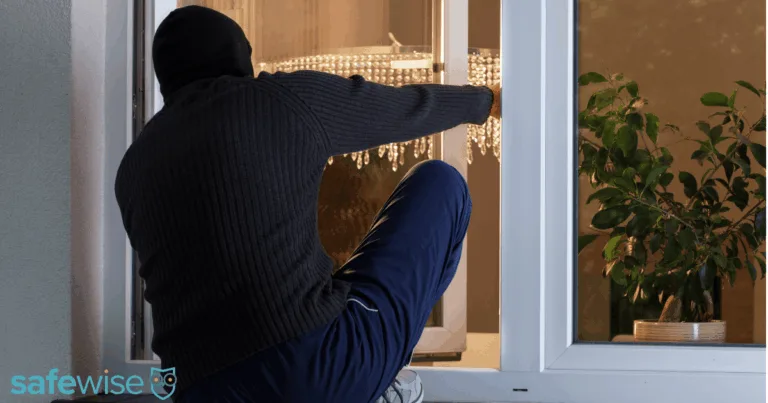
Image: SafeWise
What do burglars look for when choosing a house?
Burglars primarily assess ease and risk: how quickly they can enter and escape, plus the chance of being seen or heard. Homes with dark entries, weak locks, and clear signs of absence are top targets. The most effective deterrents directly reduce these risks by improving visibility, adding physical barriers, and signaling occupancy.
Now let's break down the real signals burglars notice first — and the ones homeowners tend to overvalue.
The risk-effort calculation most burglars make
Burglars don't carry checklists or stop to think too hard. They run a split-second mental formula: How hard is this? How likely am I to get caught? The answer usually takes less than 10 seconds, and it decides your fate.
- Time is the primary variable: Most residential burglars want to be in and out in under 10 minutes to avoid police response, making speed their top priority.
- Visibility matters more than most people realize: Sightlines from the street and neighboring homes are assessed quickly, so dark corners or tall fences that block neighbors' views are red flags for them.
- Noise risk: Barking dogs, visible occupancy signals like car lights on a timer, and active neighborhoods register as strong deterrents because they increase the chance of being heard.
- Valuables are secondary — access and escape routes come first: If a house is filled with valuables but is hard to enter, it usually gets skipped entirely in favor of an easier target next door.
This risk-effort calculation drives how burglars choose targets far more than any visible sign of wealth or luxury.
What burglars actually notice at the front of your home
Your front door is ground zero. It's the first physical barrier, and burglars assess it within seconds of pulling up to your curb. They glance at the door, the lock, the lights, and the surrounding yard before making a move.
- Door and lock quality: hollow-core doors and basic knob locks signal low resistance, while a solid wood door with a deadbolt sends a clear "hard work" message.
- Lighting: dark entryways are consistently cited in research as an access invitation, whereas a lit porch tells them someone's home or watching.
- Signs of absence: piled mail, unchanged outdoor lights, and overgrown entry paths all scream "no one's here right now" — these are classic signs your home is an easy target.
- Alarm signage: mixed evidence shows signs can deter casual offenders but don't stop experienced ones if the underlying security is weak, so a fake sticker rarely works long-term.
These cues are the fastest indicators of what attracts burglars to one house over another on the same block.
The counterintuitive things that don't matter as much as you'd think
Homeowners often spend money on things burglars barely notice or don't care about. Here's what doesn't move the needle much when a burglar is scanning the neighborhood.
- Neighborhood prestige: Experienced offenders often prefer less-watched "nice" streets because residents are away more often and security varies widely.
- Expensive cars: Nice cars are surprisingly low on the target-selection list compared to access factors, since stealing a car is riskier than a quiet break-in.
- Fancy landscaping: This actually reduces sightlines in some configurations, which can work against you by creating hiding spots for someone trying to break in unseen.
Your $50,000 SUV might stand out to you, but to a burglar, an unlocked side gate is far more tempting. That's why home security deterrents work best when they address visibility and effort, not wealth.
What makes a house a target for burglary?
A house becomes a target when it passes a quick risk scan: easy access, low visibility, and minimal noise. Research shows burglars favor homes with weak locks, dark entries, and clear signs of absence. If the entry takes under 10 minutes and no one sees or hears them, the home is marked for a break-in.
The top three triggers are:
- Dark entryways with no motion lights
- Hollow doors or weak locks that kick open easily
- Clear signs no one is home (mail, bills, overgrown yard)
Fix these, and you remove the biggest home security deterrents burglars actively avoid.
What deters burglars the most?
Motion-activated lights, solid deadbolts, and visible signs of occupancy deter more burglars than alarm stickers or expensive landscaping ever could.
Research from the University of North Carolina found that 60% of burglars would choose a different house if they saw a camera or alarm, but those numbers jump significantly when combined with lighting and solid doors. The key is layered visibility.
- Lighting: Motion lights at all entry points increase perceived risk instantly by catching intruders off guard.
- Solid entry: A wood door with a deadbolt adds physical resistance that slows down even determined offenders.
- Occupancy cues: A car in the driveway, lights on a timer, or a neighbor watching the house all signal active presence.
These simple fixes address how to make your home less attractive to burglars without spending thousands on complex systems.
The most effective home security deterrents
The most effective home security deterrents address what burglars actually care about: visibility, time, and noise. A motion light, a solid deadbolt, and signs of an occupied home cover the majority of the risk. You don't need a full smart-home system to stop most opportunists.
Start with the front door. Secure the entry. Add light. Show occupancy. That's often enough to push a burglar toward the next block before they even try your lock.
Your best bets for minimizing risk
Understanding how target selection actually works changes what you prioritize. Most people are solving the wrong problem — they focus on wealth and status instead of risk and effort. The right fixes are often simpler and cheaper than you expect.
Burglars look for easy entry, low visibility, and no noise. Stop them by making your home harder to enter, harder to hide in, and more likely to be seen. A $20 motion light and a $50 deadbolt often do more than a $5,000 alarm system. Start with the basics: light your path, lock your door, and show someone's home.
Want to start with gear that actually works? Compare expert-tested setups at SafeWise’s home security systems guide before you buy.

Recent Articles
Best Smoke Detectors of 2026
We reviewed the top fire and smoke alarms for your home in 2026. Protect your...
The Best Alexa-Compatible Home Security Systems
Best for built-in integration ADT Voice control of ADT system Works with Alexa Guard View...

Vivint App: A Complete Guide to Features and Use
Tour the Vivint app and discover its features, navigation, and customization capabilities. Learn how to...

Dangerous Apps for Kids: What Parents Need to Know in 2026
Dangerous apps for kids include ones you’ve heard of (TikTok, Instagram) and some new arrivals....


 Your Privacy Choices
