When people think about strangers at the door, it's easy to imagine worst-case scenarios. In reality, most unexpected visitors are exactly who they appear to be:
- Delivery drivers
- Neighbors
- Utility workers
- Contractors
- Salespeople
- Community volunteers
The discomfort many people feel often comes from uncertainty rather than actual danger. That's why it helps to have a simple default response to verify the person at the door.
Not necessarily. You're never obligated to open the door to a stranger. The safest approach is to identify who's there before deciding whether to answer.
That might mean checking a video doorbell, looking through a peephole, or asking who's there through the closed door. Most unexpected visitors are delivery drivers, neighbors, utility workers, or salespeople, but taking a few seconds to verify gives you more information and helps you make a confident decision.
A simple rule works well for most households: verify first, then decide.
The safest way to answer the door is to learn who you're speaking with before opening it. Here are a few practical door security tips:
- Check a video doorbell, peephole, or nearby window.
- Speak through the closed and locked door.
- Ask the visitor who they are and why they're there.
- Request identification from anyone claiming to represent a company, utility, contractor, or government agency.
- Verify appointments or service visits if something seems unexpected.
Legitimate visitors generally expect these questions. Taking a moment to verify someone's identity isn't rude. It's a normal part of home security.
If you decide to open the door, keep the interaction brief and stay aware of your surroundings.
Keep the door closed and gather more information. A visitor may deserve extra caution if they refuse to identify themselves, change their story when questioned, pressure you to act immediately, or become unusually aggressive.
Trust your judgment. If something feels off, you don't need to continue the conversation. You can do the following:
- Ask additional questions through the closed door.
- Request identification.
- Verify their information independently.
- Tell them you're not interested and end the conversation.
If someone refuses to leave, attempts to enter your home, or behaves aggressively, contact local law enforcement immediately.
A suspicious visitor doesn't automatically mean danger, but slowing the interaction down gives you time to assess the situation and decide on your next step.



 5 min read
 Edited By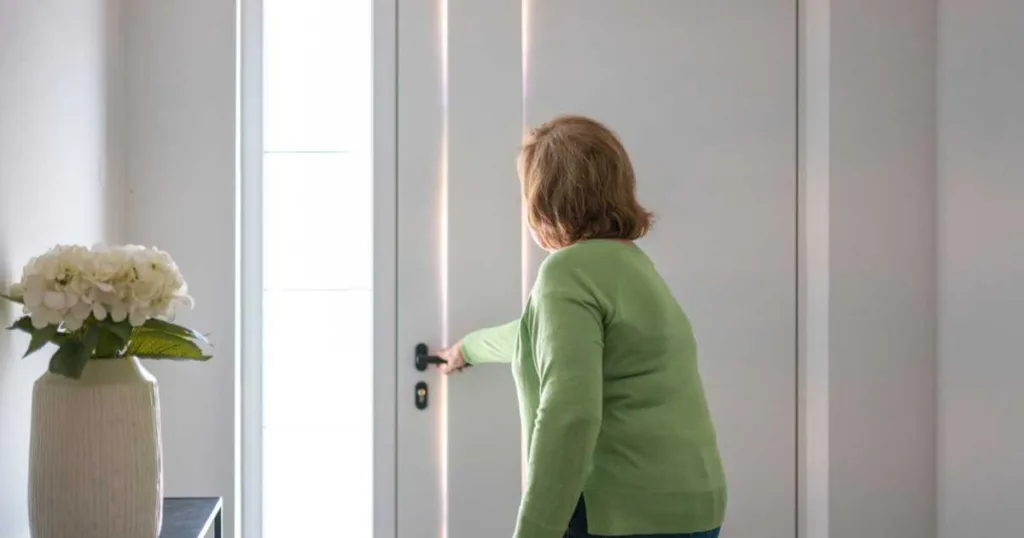



 Your Privacy Choices
