What is allowed and added
The ban will not prohibit all online activity for under-16s. Educational apps, such as Google Classroom and YouTube Kids, and messaging services, like WhatsApp and Signal, are not slated for the ban.
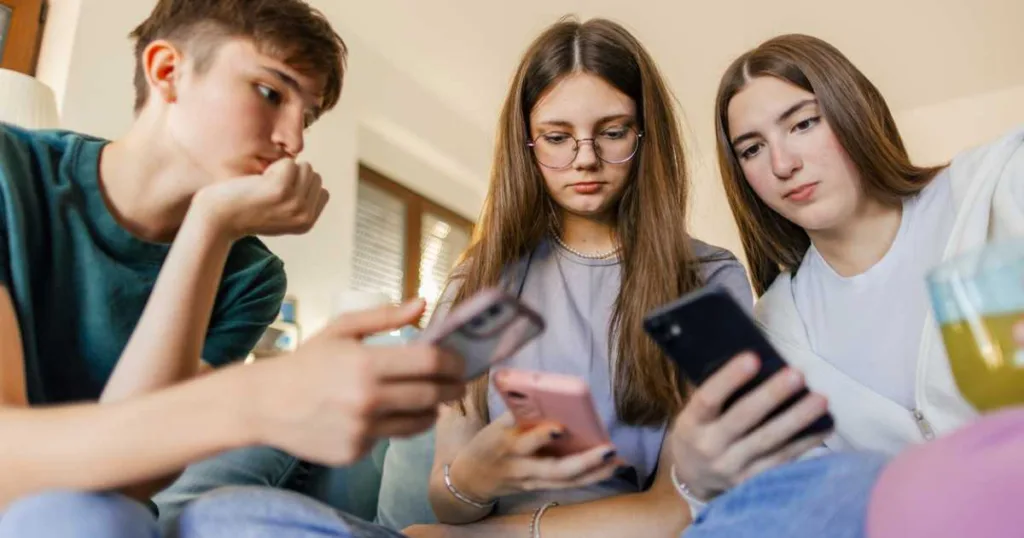
The average 8 to 14-year-old in Britain spends about 3.5 hours a day on social media, according to Ofcom, the independent agency that regulates the UK’s communications industry.
To fill the void left by the social media ban, the government is investing in offline facilities to encourage kids' engagement. That includes £500 million for sports, arts, and other enrichment activities from the Department for Culture, Media, and Sport. The Department of Education is proposing a £132.5 million plan to support school programs beyond the classroom, and the government is investing an additional £3 billion to build or refurbish up to 250 youth centers.
Other countries taking action
In addition to Australia, Indonesia, and Malaysia have enacted social Media bans for under-16s. Canada has introduced a bill with a similar ban, while France just passed a bill in its lower house for children under 15, and Greece has announced a similar legislation. Germany, Denmark, Austria, Spain, Poland, and Slovenia are also discussing bans.
Several bans have been introduced in the United States Congress, but they have been left to die in committees. The latest version was introduced in the Senate earlier this year by Senator Ted Cruz (R-TX) and Senator Brian Schatz (D-HI). A companion bill was introduced in the House.
A noticeable difference in the U.S. versions of the social media ban is that it drops the age barrier to 13. MacDermott says the difference results from a combination of outdated information and industry pressure.
“The US threshold of 13 is a COPPA (Children's Online Privacy Protection Act) legacy — designed around data collection in 1998, not harm,” says MacDermott. “It was never a developmental threshold; it was negotiated between child safety advocates and platform lobbyists. The UK's 16 reflects the developmental literature: platform harm is most acute in the 11-to-16 age range — peak neurological vulnerability to social comparison and algorithmic amplification of distress. The honest answer to why the US is at 13: the US platform industry has more political power over its legislature than the UK platform industry has over Westminster.”
Can this ban be enforced?
There are roughly 12.7 million children under 16 in the UK, according to the Office of National Statistics. Enforcing a social media ban on that group presents a challenge
“The government's answer is privacy-preserving age assurance — technologies that verify age without storing identity. These technologies exist. They are not yet deployed at scale,” says MacDermott. “Ofcom has been given an extraordinarily large mandate under the Online Safety Act without the technical staff, investigative capacity, or enforcement budget to fully execute it. The policy is right. The enforcement architecture is not yet adequate. That is an argument for investing in it now, not after the deadline.”
Australia enforces its ban by focusing on the tech companies involved. Large fines are reserved for repeat offenders. Social media platforms are required to use multiple age-verification procedures, including government ID checks, facial recognition scans, and bank account confirmation.
Ofcom has been tasked with developing specific age verification requirements. Those will be announced in coming months, according to the government.
The age verification checks will not be required for most adults, because they already had their ages verified under the Online Safety Act. In addition, those with an online account for over 16 years and those with an account linked to a credit card will not be required to submit to age verification.
Watch out for VPN workarounds
Oddly enough, a service designed to ensure online privacy offers a way for kids to bypass age verification. A VPN (Virtual Private Network) allows users to surf the internet without revealing their physical location. It encrypts a user’s data, making it unreadable to third parties, such as hackers, law enforcement, and even the user’s internet service provider (ISP).
“A child in the UK barred from Instagram can access it through a VPN in thirty seconds,” says MacDermott. “The UK should be leading a Five Eyes or G7 initiative on coordinated platform age assurance standards. It is not.”
The government has acknowledged the VPN risk and says it will release information on research it has commissioned into how to counter it in July.
With more countries considering social media bans for children, MacDermott thinks it is time for a global solution.
“One angle worth pursuing: The enforcement of any national age restriction requires international platform cooperation — which requires international regulatory coordination — which does not currently exist.”



 4 min read
 Edited By





 Your Privacy Choices
