



Top 4 Best Medical Alert Watches for Seniors (2026 Edition)

We tried out and compared the specs of over a dozen medical alert watches. Here are the ones we'd trust for ourselves and our loved ones.
SafeWise pick
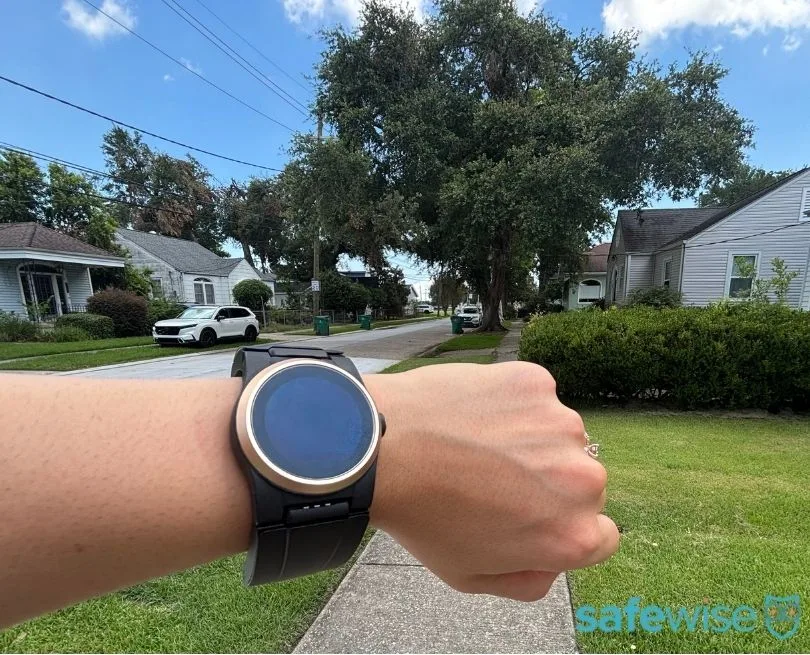
LifeFone Safe Watch on woman's wrist
LifeFone Safe Watch Active
4.5 out of 5 stars
4.5
  • pro
    Professionally monitored
  • pro
    Accurate fall detection
  • pro
    Good GPS accuracy
Good battery life
Lifeline Smartwatch
4 out of 5 stars
4
  • pro
    Professionally monitored
  • pro
    Above-average fall detection
  • pro
    Good GPS accuracy
Budget pick
Visit Amazon for up-to-date pricing and features.
Apple Watch
4 out of 5 stars
4
  • con
    Not professionally monitored
  • pro
    Voice and text
  • pro
    Fall detection
Best for dementia
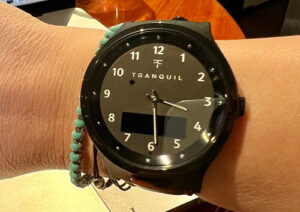
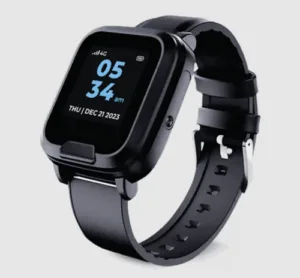
Black Tranquil GPS tracker watch
Tranquil watch
4 out of 5 stars
4
  • pro
    Excellent tracking and calling features
  • pro
    7-day battery life
  • con
    No fall detection
Why you can trust SafeWise
products considered
250+
research hours in 25+ in-home tests
10k+
years of combined experience
176+
homes and people protected
10M+

For over 13 years, SafeWise experts have conducted independent research and testing to write unbiased, human reviews (not robots). Learn more.

Cathy Habas
Jul 13, 2026
Icon Time To Read10 min read
Icon CheckReviewed ByEmily Breaux

Cathy and Emily are some of the internet's most knowledgeable voices in senior safety tech. Each holds a certificate in gerontology, and they have 9 years of combined experience testing, researching, and reviewing medical alert systems. Both have covered aging and wellness in major publications.

In my experience as a hands-on medical alert tester, necklaces/pendants are more reliable than smartwatches for fall detection and GPS accuracy. But I get it — many people don't want to wear a traditional medical alert necklace because they associate it with being feeble or vulnerable. Medical alert smartwatches offer a more modern appearance that reflects your active, independent mindset. 

They're not all created equal, though. We've been working hard to find the most reliable medical alert watches and weed out the ones that aren't worth your time. After testing more than six brands, we're ready to make some recommendations. The LifeFone Smart Watch Active tops our current list because it was the most accurate performer in our fall detection and GPS tests. 


Compare the best medical alert watches

Best forBest overall Good battery life Budget pick Best for dementia
Up-front price
Lowest monthly price$40.29/mo. $34.95/mo. Varies by carrier$44.95/mo.
Fall detection accuracy5 out of 6 falls detected 4 out of 6 falls detected Too smart to test**N/A
GPS accuracy2 out of 3 locations2 out of 3 locations0/3 locationsGood^
Average monitor response time57 seconds51 secondsN/A (goes straight to 911)N/A
Battery lifeLasts all dayLasts multiple daysLasts all day1 week
Ease of useModerateGoodGoodExcellent
Audio qualityExcellentExcellentExcellentExcellent
Learn More

Scroll or swipe right to view full table.

*Amazon.com price as of post date. Read full disclaimer.
**Apple Watch algorithms seem to know the difference between dropping the watch (which is how we test fall detection) and truly falling while wearing the watch. See below for details.
^We tested Tranquil Watch several years ago using a different methodology, so we can't say it got X out of 3 locations correct. See below for details. 

Video: Best GPS Trackers for Dementia

Play Video

Subscribe to our YouTube channel to learn how to protect your home, loved ones, and belongings.

1. LifeFone Safe Watch Active: Best overall

The LifeFone Safe Watch Active stands out as the top-performing medical alert smartwatch because of its fall detection accuracy. It detected the most falls of any medical alert watch we've tested so far. That said, it wasn't totally perfect.

We test two types of falls: fast falls (dropping the watch from shoulder height) and slow falls (tossing the watch underhand like a bowling ball). The watch triggered with all three fast falls and all three slow falls. However, the call disconnected after triggering one of the slow falls, so we never talked to a monitoring center agent. We counted that as a failed fall test.

pro
Pros
pro Most accurate fall detection of any watch we've tested
pro Fall detection is cheaper than most ($5/mo.)
pro Good GPS accuracy
pro Loved ones can locate watch via text message
pro Caregivers notified via text, phone, and email during an emergency
pro Tracks steps
con
Cons
con Can feel large and heavy
con Side button has two functions, so it's important to practice calling for help
con Dropped call during fall detection test

We didn't experience any false alarms while using the LifeFone Safe Watch Active, but we appreciate that alerts can be cancelled before you connect to the monitoring center.  (No one wants to be embarrassed by a voice shouting, "Do you need help??" in the middle of the grocery store.)

It was extremely easy to understand the monitoring center agents thanks to loud, clear audio. When we asked them to name our current location, they provided the correct address two out of three times. The wrong address was two houses down from the actual address. Unfortunately, we also experienced another dropped call during this portion of the test. 

You might be wondering why a medical alert watch that dropped two calls is our top recommendation. We think that's a reflection of the medical alert watch market in general. These devices tend to be less reliable than the mobile devices that are worn on a lanyard or bracelet.

Other watches dropped calls as well, so when we look at the whole picture from fall detection accuracy to GPS precision to audio quality, we think the LifeFone Smart Watch Active is as good as it gets. We're scheduled to test more smartwatches later in 2026, so stay tuned. 

We also want to point out that it's important to practice using the LifeFone Smart Watch Active's help button. In an emergency, you might think you just need to push the side button one time to make a call. All that does is lock the screen. You actually need to press and hold the side button until the watch vibrates.

Check out our full LifeFone review to learn why this is one of our favorite medical alert companies in general. 

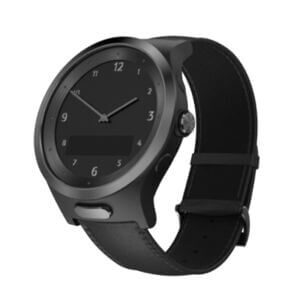
2. Lifeline Smartwatch: Good battery life

Note: The Lifeline Smartwatch is exactly the same as the Medical Alert Smartwatch.

The Lifeline Smartwatch performed about the same as the LifeFone Safe Watch Active, but it was less reliable for fall detection. It failed to detect two out of three fast falls but detected all slow falls. This is a bit unusual, as most fall detection devices ace the fast fall tests but struggle with the slow fall tests. 

One big takeaway from testing is that the Lifeline Smartwatch is smaller and lighter than most medical alert watches. It also has a battery that lasts for about two days instead of 18 to 24 hours. 

pro
Pros
pro Step tracker and heart rate monitor
pro Excels at detecting slow falls
pro Lightweight and low profile
con
Cons
con No activation intructions in user manual
con Dropped one call but agent called back

During our GPS tests, one call dropped but the agent called back right away. The monitoring center gave the correct address two out of three times. The third time, they provided the address of a business across the street. 

As with the LifeFone Safe Watch Active, we recommend you practice calling the monitoring center with the Lifeline Smartwatch. The help button is small, low-profile, and blends in with the rest of the watch. Make sure you know where it's located so that you don't panic during an emergency. 

Read our full Lifeline review to learn more about what to expect with this medical alert company. 

3. Apple Watch: Budget pick

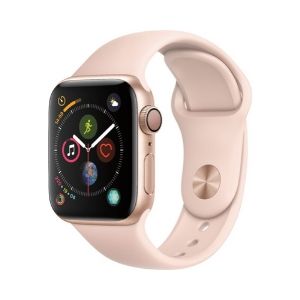
A lot of people recognize that they might benefit from fall detection, but they're not ready to pay monthly for a dedicated medical alert watch. That's where the Apple Watch comes in as a budget-friendly option. Although it can cost several hundred dollars upfront, it includes fall detection for no extra fee. It also offers a heart rate monitor, an ECG app, and easy access to 911 through an SOS button. Caregivers can also see the watch's location if they're part of a Family Sharing group.

For a short time, professional monitoring was available on the Apple Watch through Lively. That partnership has since ended. No professional monitoring is currently available. 

We recommend getting at least the Apple Watch Series 4 since this is the first version to include fall detection. 

pro
Pros
pro Emergency button
pro Automatic fall detection
pro Step and fitness tracker
pro Extra apps available
pro Medical ID available to 911 and first responders (optional)
con
Cons
con Detailed setup
con No trial period
con No professional monitoring
con Poor GPS tracking (may vary by model)

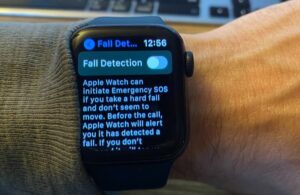
Testing the Apple Watch's fall detection proved very tricky. We attempted more than 18 fall tests on three Apple Watches and could never trigger the sensor. After digging around online, we think the Apple Watch is too smart for drop tests. People we know personally have said the Apple Watch detected their real falls, and there are many similar reports on various message boards. 

We're not quite ready to do stunt falls to test these devices. So for now, all we can say is that Apple Watch's fall detection seems to work, but we couldn't confirm it first-hand.

As for GPS accuracy, it might vary based on whether you have an older Apple Watch or a newer Apple Watch. On the Apple Watch SE, location accuracy was abysmal. The watch appeared on a map more than 100 yards away from its actual location. First responders might have a hard time finding you if you can't tell them where you are. 

Before you buy an Apple Watch as a medical alert system, keep in mind that it's not professionally monitored. Many people use their medical alerts when they're feeling lonely or have non-emergency questions. Private monitoring centers can handle this with compassion and grace, but 911 dispatchers play by different rules. First responders may visit your location to verify you're okay, and you may be fined for too many non-emergency calls.

Check out our full Apple Watch review for more information about the settings you need to turn on for the best performance. 

4. Tranquil Watch: Best for dementia

When your loved one starts showing signs of dementia, it can be hard to find that balance between protecting them and respecting their independence. 

The Tranquil Watch is a wearable that gives your aging parent the freedom to go where they want and the insight to keep you posted on their location. Along with GPS tracking, Tranquil has Safe Zone and Home Exit alerts, so you'll know when they arrive at a trusted place or leave their home alone

No technology can replace in-home care in the later stages of dementia, but a device like the Tranquil Watch can offer critical safety features in earlier stages. 

pro
Pros
pro Interactive features
pro Accurate tracking
pro Unlimited family app access
pro Stylish design
pro Fully waterproof and long battery life
pro Safe zones and home exit alerts
con
Cons
con Very expensive
con No fall detection

It also has auto-answer calling and two-way talk, allowing you to talk to them through the watch instantly. Top that off with complete waterproofing and a week-long battery life, you can track them even in the worst conditions. 

The biggest problem with Tranquil, however, is its steep price. Up front, the watch costs between $800 and $1,000. Add on the regular $55 per month fee (slightly lower if you pay for the year upfront), and Tranquil may be out of reach for many caregivers. 

But if you can spend this kind of money to keep your loved one safe, we highly recommend Tranquil. It strikes a sweet spot between stylish, practical wearability and caregiving essentials. 

More medical alert watches we considered

LifeStation Sidekick Smart

The LifeStation Sidekick Smart performed about average during our tests. It detected 4 out of 6 falls (the two falls it missed were slow falls) and knew our exact location in 1 out of 3 tests. Monitoring center agents answered in an average of 43 seconds, which is the fastest response time of any watch we've tested. 

Although its accuracy wasn't perfect, the LifeStation Sidekick Smart is one of the few medical alert smart watches to not drop any of our calls during tests. 

Audio quality is excellent, caregivers can see the watch's location by sending a simple text message, and its battery lasts all day. This is a watch worth considering, but we recommend testing its GPS capabilities as soon as you set it up. 

Learn more about the pros and cons in our full LifeStation review

Image: Alina Bradford, SafeWise

Kanega Watch

Image: Emily Breaux, SafeWise

The Kanega Watch is a unique medical alert smartwatch with optional voice activation. It also has swappable battery packs that make it possible to wear the watch 24/7. 

Like the Apple Watch, we have to label the Kanega Watch's fall detection as "too smart to test." After talking with a representative from UnaliWear (the company that makes the Kanega Watch), we learned that the watch is designed to detect real falls, not drops. And if a customer says that a fall wasn't detected, UnaliWear can capture the sensor data from the time the fall occurred and add it to their database to improve the accuracy of all Kanega Watches. You can also call customer service to have the watch's fall detection sensitivity turned up or down. 

Unfortunately, the Kanega Watch left a lot to be desired when testing GPS accuracy. None of the agents we talked to could pull up our location because the watch's cell signal was so bad. The poor cellular signal also made it really difficult to hear the agents. Two of them called us by phone to get a better connection.

We also waited nearly four minutes for a monitoring center agent to answer one of our calls. This isn't a device we'd rely on to keep ourselves or a loved one safe in an emergency. 

Medical Guardian MGMove

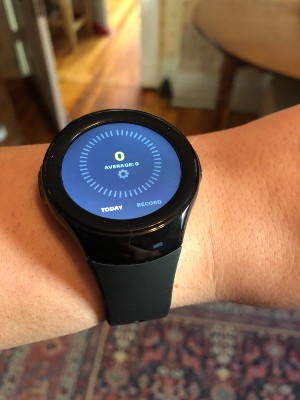
The Medical Guardian MGMove caregiver portal lets loved ones see where you are and whether you've been active yet that day — which is actually an excellent layer of protection, since something's definitely wrong if you've taken 0 steps. 

There are medication and appointment reminders and text messaging options. Since the watch face is too small for a keyboard, you just talk to the watch and it turns your words into texts—a nice touch for people with arthritic fingers. 

Plus, Medical Guardian's monitoring center is Five Diamond certified, and their products are consistently some of the best we've ever reviewed. 

Their experience and track record makes them trustworthy but also means you'll feel the difference in your wallet. The MGMove is expensive right off the bat, and some of the perks we mentioned—like reminders—cost extra each month. Expect a bill close to $50 a month on top of the nearly $200 required to get the watch.

Nonetheless, we like how this one looks on paper. We'll be testing soon. Learn more in our full Medical Guardian review.

AngelSense Watch

The AngelSense Watch is new to the market. We haven't had a chance to test it yet, but we have high hopes thanks to our good experiences with AngelSense's flagship GPS tracker

It's not a professionally-monitored watch, so caregivers are the only ones who get alerts when the SOS button is pressed. There's a fall detection option currently in beta testing, so it's too soon to tell if that'll be a permanent feature in the AngelSense Watch. 

It comes with basic caregiving features, like location tracking, route history geofencing, and low-battery alerts. There's also an auto pickup feature that lets you talk directly to your loved one even if they're not able to answer. 

Bay Alarm Medical's SOS Smartwatch

We expected to like the SOS Smartwatch because Bay Alarm Medical is one of our favorite medical alert companies. But this product was a dud. Our tests didn't go well, from navigating the touchscreen with difficulty to placing test calls that never went through. We're looking forward to testing a new one to give it a second chance.

The SOS Smartwatch appears to be from the same manufacturers as the MGMove and Sidekick Smart. If you like this design, we'd go with the MGMove—it has more features than the SOS Smartwatch anyway.

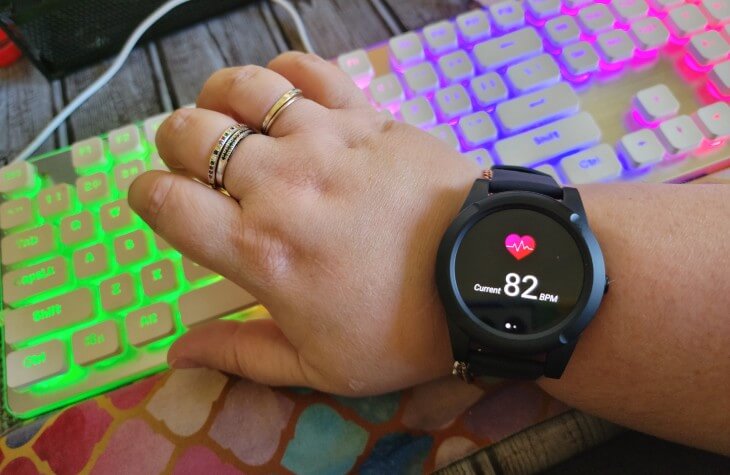
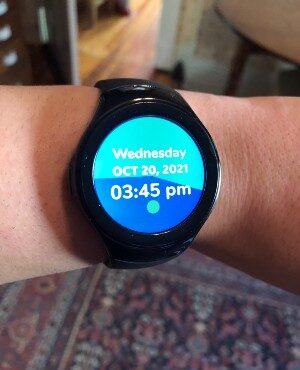
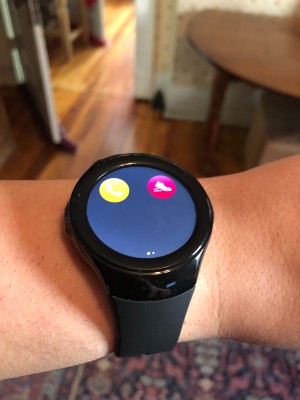
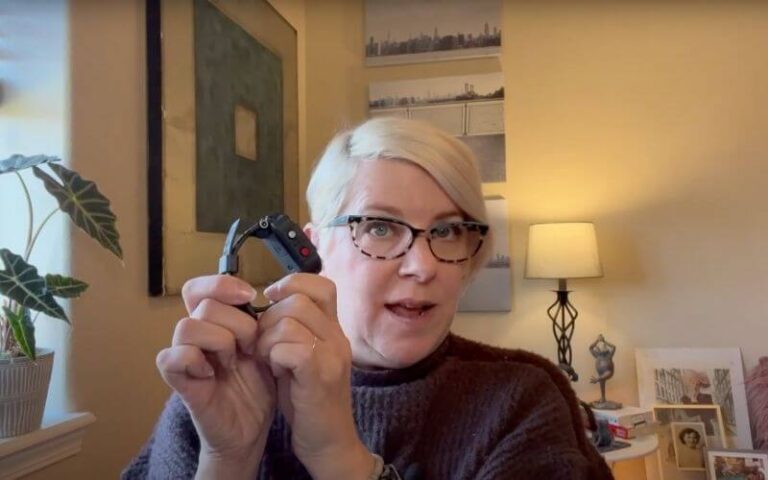
Senior safety expert Cathy Habas wearing the Bay Alarm SOS Smartwatch and demonstrating its home screen.
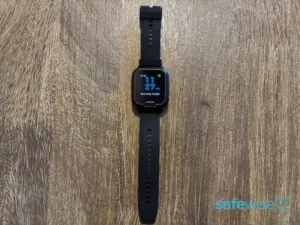
SOS smartwatch
SOS smartwatch

Images: Cathy Habas, SafeWise

HandsFree Health WellBe Smartwatch

The WellBe Smartwatch from HandsFree Health is a fully waterproof, GPS-enabled medical alert watch with optional fall detection. It also includes a pedometer and a heart rate monitor, but the coolest thing about the WellBe Smartwatch is its voice-activated health assistant. As the watch questions, much like you would with Amazon Alexa. It can even remind you to take your medication or about upcoming appointments.

Bundle the WellBe Smartwatch with the WellBe Smart Speaker for even more functionality. 

Medical alert watch FAQs

No, the FitBit Sense is not a fall detection watch, nor is any other FitBit model.

Generally, no. Most medical alert providers charge a one-time equipment fee and a monthly monitoring fee (if connected to a professional monitoring center). If you sign up for a medical alert service or buy a watch with monthly fees, it’s likely you’ll pay on a month-to-month basis. So you can cancel or switch your service whenever you wish.

Medical alert watches cost about $50 to $300 up front. Most medical alert companies charge around $30 per month to monitor these smartwatches, but we found fees ranging from $10 to $70 per month.

Smart watches for older adults are designed to be easy, but the learning curve still exists and false alarms can happen. When you accidentally press the emergency button, what happens next depends on the type of system you have.

Usually, you’ll have around 30 seconds to cancel the emergency call by swiping the watch face or pressing the button again. You can always explain the false alarm to the professional monitor once they start talking to you. We haven’t found any that penalize users for false alarms.

In rare cases, a Medicare Advantage (Medicare Part C) plan might cover a medical alert watch, but the answer is usually no. Medical alerts aren't considered "durable medical equipment" and therefore aren't covered by Medicare Part A or Part B. 

Modern smartwatches often include SOS buttons and automatic fall detection, but they're unlikely to do the following:

  • Show caregivers your current GPS location
  • Send low battery alerts to caregivers
  • Connect you to a professional monitoring center to direct your call, which cuts down on false alarms sent to 911

A medical alert watch is better than a smartwatch when caregivers want to stay informed about their loved one's activities. 

How we chose the best medical alert watches

Rebecca Edwards holding TickTalk 4 watch

Image: SafeWise

In addition to the usual medical alert features like two-way talk, automatic fall detection, and GPS tracking, medical alert watches tend to have extras like medication reminders, messaging, calendar apps, weather apps, and more. We decided to include both simple and complex medical alert watches in our list so people can choose what’s best for them, but we emphasized complexity for the “more bang for your buck” factor. 

We prioritized standalone watches that don’t require a Bluetooth connection with a smartphone to place emergency calls—the risk of losing your phone is just too great. Battery life is also a huge deal when it comes to medical alert watches—they should last throughout the day, even if the watch is frequently used. 

Customization options earned brownie points from our team, whether that means choosing from an AT&T- or Verizon-compatible SIM card or selecting who gets called (caregivers, professional monitors, or 911) when the SOS button is pressed. We also considered cost, warranties, trial periods, and company reputation.

We conducted hands-on testing for the Apple Watch, Angel Watch, Bay Alarm Medical SOS Smartwatch, AngelSense Watch, LifeStation Sidekick Smart, LifeFone Safe Watch Active, Lifeline/Medical Alert Smartwatch, Kanega Watch, and the Tranquil Watch. Our editorial team rated ease of setup and use, real-world battery life, audio quality, aesthetics, durability, weight, GPS accuracy, monitoring center response time, fall detection accuracy, and companion app functionality (when applicable). 

Finally, we evaluated the best medical alert watches with the same criteria used to pick the best GPS medical alerts and the best fall detection devices. Visit those pages to learn more about our process.    

Final word on the best medical alert smartwatches

Based on our testing data, we think the LifeFone Smart Watch Active is the best choice for most people. It's sensitive to falls and shows the right GPS location most of the time. However, it has a problem that's common among medical alert smartwatches: dropped calls due to poor cell signals. No matter which watch you choose, it's important to test it right away to make sure it works well in your area.

We're continuing to test medical alert smartwatches in our quest to find the most reliable choices. Stay tuned.

Disclaimer

*Product prices and availability are accurate as of the date/time indicated and are subject to change. Any price and availability information displayed on Amazon at the time of purchase will apply to the purchase of this product. Safewise.com utilizes paid Amazon links.

Certain content that appears on this site comes from Amazon. This content is provided “as is” and is subject to change or removal at any time.

Cathy Habas
Written by
With over 12 years of experience as a content writer, Cathy has a knack for untangling complex information. Her natural curiosity and ability to empathize help Cathy offer insightful, friendly advice. She believes in empowering readers who may not feel confident about a purchase, project, or topic. Cathy earned her Bachelor of Arts degree in English from Indiana University Southeast and began her professional writing career immediately after graduation. She has focused on family safety, home guides, and health content since 2021 and earned a gerontology certificate to learn more about the medical side of senior safety. Over the years, Cathy has contributed to sites like SELF.com, SingleCare, My Health Teams, Safety.com, Reviews.com, Hunker, Popular Living, and Thumbtack.

Recent Articles

Technician installing a smoke alarm
Best Smoke Detectors of 2026
We reviewed the top fire and smoke alarms for your home in 2026. Protect your...
woman checking on home security system via app on smartphone
The Best Alexa-Compatible Home Security Systems
Best for built-in integration ADT Voice control of ADT system Works with Alexa Guard View...
Vivint App: A Complete Guide to Features and Use
Tour the Vivint app and discover its features, navigation, and customization capabilities. Learn how to...
dangerous apps for kids
Dangerous Apps for Kids: What Parents Need to Know in 2026
Dangerous apps for kids include ones you’ve heard of (TikTok, Instagram) and some new arrivals....