What’s the Real Cost of Life Alert?

Why you can trust SafeWise
products considered
250+
research hours in 25+ in-home tests
10k+
years of combined experience
176+
homes and people protected
10M+

For over 13 years, SafeWise experts have conducted independent research and testing to write unbiased, human reviews (not robots). Learn more.

Emily Breaux
May 18, 2026
Icon Time To Read4 min read
Icon CheckEdited ByCathy Habas

Since 2022, Emily has tested and researched 30+ medical alert systems and written countless product reviews and buying guides to help shoppers navigate the senior safety space.

Icon Light Bulb  Dark
Key takeaways

At $70–$100+ a month plus a $248 equipment fee, Life Alert costs nearly twice as much as its competitors across the board while offering limited features.

Founded in 1987, Life Alert is one of the oldest and most well-known brands in the industry thanks to the unforgettable “Help, I’ve fallen and I can’t get up” commercials. While Life Alert has been around for nearly 40 years, its policies and sales tactics haven’t changed much since the 80s. You can't purchase products online, and you must call the company for any pricing information. 

So if you're wondering what the real cost of Life Alert is, don’t worry, we did the hard work for you. We sat on a 45-minute sales call with Life Alert to get the most recent pricing, policy, and product information. 

How much does Life Alert cost?

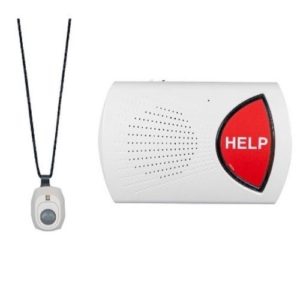
Life Alert’s lowest starting price is $69.95 per month for the main unit, an at-home landline or cellular base station that pairs with a wearable help button with up to a 1,000-foot range. That’s more than double the price for most at-home medical alert systems. 

The standard wearable help button doesn't contain a speaker or microphone. You can only communicate through the main unit's speaker. For easier communication, you can upgrade the help button to either a necklace or wristband with two-way talk. Known as the Micro Voice Pendant or Wristband Button, this upgrade raises the price to $89.90 per month.

If you prefer on-the-go monitoring, the mobile system costs $89.90 per month.

You can add a wall button with two-way talk to any device for an additional $20 per month. 

No matter which equipment package you choose, you’ll be charged a $248 one-time equipment fee.

Life Alert Device
Monthly Cost
At-Home$69.95/mo.
At-Home + Micro Voice Pendant$89.95/mo.
At-Home + Wristband Button$89.95/mo.
Help On-the-Go GPS $89.95/mo.
Help Button (wall mounted)Extra $20.00/mo.

*Prices collected by SafeWise during a May 2026 sales call.

Life Alert is the most expensive choice

With prices ranging from about $70/mo. to $109/mo., Life Alert is the most expensive medical alert system on the market. Other brands cost $25/mo. to $70/mo. per month. Life Alert's up-front equipment fee of $248 also costs more than what other brands charge, which typically falls between $0 and $200.

See our picks for the most affordable medical alert systems to find options within your budget. 

Life Alert locks you into a 3-year contract

Life Alert requires a three-year minimum contract, meaning you’ll be paying at least $2,700 for those first three years of service.

While the Life Alert sales rep assured us that the monthly price never goes up after you’ve purchased your equipment, this seems like a small consolation for a strict three-year contract and such high monthly costs.


Thumbs Down

Life Alert doesn’t offer a trial period or early cancellation. You can only cancel your contract if the user requires 24/7 care, relocates to an assisted living facility or nursing home, or passes away. 

Is Life Alert worth the price?

Life Alert is pricey, but is there a good reason for the higher cost? After weighing the pros and cons, we don't think so. 

pro
Pros
pro 10-year battery life for all devices
pro Two-day shipping
pro Waterproof pendants
pro Industry experience
con
Cons
con Three-year contract
con Leased equipment
con No trial period
con No fall detection
con High-pressure sales tactics
con No location tracking for caregivers

Pros

  1. No battery charging: Pendants, help buttons, and even mobile systems have a 10-year battery life, which means you never have to worry about charging them.
  2. Fast shipping: You'll receive your Life Alert system within two business days at no extra cost.
  3. Waterproof devices: All Life Alert equipment is fully waterproof and bath-friendly, including the two-way-talk wall button.
  4. Industry experience: Life Alert has decades of experience fine-tuning its products and its monitoring service. It's unlikely to go out of business and leave you without service.

Cons

  1. Lengthy contract: Life Alert requires a minimum three-year contract that's difficult to cancel.
  2. No trial period: If you try out Life Alert and don't like it, you're still locked into a three-year contract.
  3. No fall detection: None of Life Alert’s devices offer fall detection, even though this is a common medical alert feature. 
  4. High-pressure sales tactics: You can’t purchase or learn about Life Alert systems without talking to a sales representative. Be prepared to listen to a lengthy sales pitch and receive multiple follow-up calls (and texts!) pressuring you to purchase.
  5. No caregiver app: Caregiver apps allow loved ones to remotely monitor device status, battery life, and more. Life Alert doesn’t offer an app. 
  6. No location tracking for caregivers: Caregivers can't see the location of the Life Alert mobile device, only monitoring center agents can. While this protects your privacy, it offers less peace of mind for caregivers. 

Life Alert alternatives

Like, "Kleenex" or "Post-It's", Life Alert is just one brand in a whole industry of products. There are better, more affordable medical alert systems that don’t require a contract commitment. In fact, all our top alternatives to Life Alert offer a 15- to 30-day trial period. 

Bay Alarm Medical

SafeWise pick

Bay Alarm Medical offers at-home and mobile systems from $28 to $65 per month, compared to Life Alert’s $70 to $100+ per month. You can choose from multiple mobile devices, from a smartwatch to a simple wristband. Wall buttons are a $35 one-time fee instead of a recurring monthly fee, and fall detection is available for all devices. 

Read our full Bay Alarm Medical review

Medical Guardian

Best premium features

Medical Guardian is known for its premium equipment and features, like voice-activated wall buttons and caregiver messaging. The brand’s monthly prices are slightly higher than some, but the $37/month starting price is still about half the cost of Life Alert. 

Read our full Medical Guardian review.

LifeFone

Best caregiver features

LifeFone has some of the highest customer ratings of any medical alert system, as well as helpful caregiver and monitoring features. Daily check-in calls, real-time location tracking, and a robust caregiver app are available for proactive caregivers. And with $5/month fall detection and $0 equipment fees, LifeFone is a much more affordable option. 

Read our full LifeFone review to learn how it performed during testing


Looking for a medical alert device?

Compare the best medical alert systems

Brand
Best for
Lowest monthly price
In-home range
Backup battery
Landline option available
Learn more
SafeWise pick1000 ft.32 hrs.
Icon Yes  LightYes
Best premium features1400 ft.32 hrs.
Icon Yes  LightYes
Best for fall detection800 ft.30 hrs.
Icon Yes  LightYes
Best remote caregiver services1,300 ft.32 hrs.
Icon Yes  LightYes

Data effective as of post date. Offers and availability subject to change.

Life Alert price FAQ

We don’t recommend Life Alert due to its high fees, three-year contract, pushy sales tactics, and lack of features like fall detection or location tracking for caregivers. We don’t think Life Alert is worth the cost.

Life Alert starts at $69.95 per month and includes a $248 one-time equipment fee. Other popular medical alert systems start at $25–$30 per month and may or may not include an equipment fee.

Yes, the one-time equipment fee covers sales tax and shipping costs.

No, Life Alert isn’t covered by Original Medicare (Part A or B). Some Medicare Advantage plans (Part C) may cover medical alert systems, but coverage will vary by plan, and you may not get to choose your equipment. 

Yes, we confirmed with a rep you must pay the $248 equipment fee when purchasing your equipment.

Yes. To cancel your contract, Life Alert requires you to provide a signed letter from a doctor or nursing home verifying your loved one’s admittance to a nursing home, hospital, or other care facility.

Possibly. We think sales reps may have some leeway with pricing, because our sales rep did indicate that he had some authority to lower the activation fee. It certainly doesn’t hurt to ask. 

No, you can't get Life Alert for free. 


Final word

If you’re looking for an established company with a long history of quality products and reliable monitoring, then Life Alert may be right for you. It does cost significantly more than competitors, but some may find the name recognition and experience worth it.

Personally, we think Life Alert's high cost and three-year contract outweigh any benefits. There are plenty reputable medical alert systems for half the price with actual trial periods and more robust features.

Check out our list of best medical alert systems to explore our favorite brands. 

Emily Breaux
Written by
Emily is passionate about creating helpful, informative content that empowers readers to make more informed decisions about their health, safety, and homes. Since 2022, she’s tested and researched 30+ medical alert systems and written countless product reviews and buying guides to help shoppers navigate the senior safety space. Emily earned a B.A. in English Secondary Education from Louisiana State University and holds a certificate in gerontology from Delgado Community College. When she’s not writing, she enjoys neighborhood walks, yoga, performing in local musical theatre, and finding her next read. Emily lives in New Orleans with her husband and daughter.

Recent Articles

Eufy camera 3 with solar panels built in the top, sitting on a wooden counter
Best Security Cameras without a Subscription 2026
Paying a monthly fee for a security camera isn't easy on your wallet. Based on...
ring spotlight camera on outdoor wall
Ring Camera Storage Plans
Ring Protect is a great option for saving video from Ring security cameras. Learn about...
elderly-woman-checking-watch-on-bench
4 Best GPS Trackers for Dementia Patients (2026 Review)
GPS tracking can help caregivers watch loved ones with dementia and prevent wandering. We reviewed...
dark brick porch with light from decorative porch light
A Guide to Porch Light Safety: Leave It On or Turn It Off?
What does leaving the porch light on mean? And when should you turn it off?...