

Medical alert systems can be described by where they’re used (in-home or on the go) and by whom you talk to through the device (a professional monitoring center, a friend, or 911). We’ll break down the terminology so you can choose the system that’s right for you.
Types of Medical Alert Systems and How They Work
Why you can trust SafeWise
products considered
250+
research hours in 25+ in-home tests
10k+
years of combined experience
176+
homes and people protected
10M+
For over 13 years, SafeWise experts have conducted independent research and testing to write unbiased, human reviews (not robots). Learn more.

 5 min read
 Reviewed ByRebecca Edwards
Cathy has been researching and writing about safe aging since 2021. She holds a certificate in gerontology and is one of the internet's most knowledgeable voices in senior safety tech. Her work embodies a hands-on, empathetic approach.

Last Updated: 55 minutes ago
I added an FAQ about panic pendants, clarified some information, and reorganized the page to make it easier to read.
What’s a medical alert system, and how does it work?
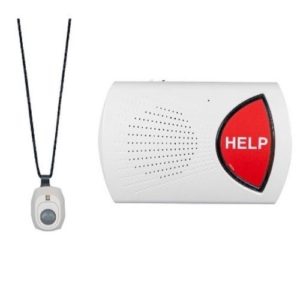
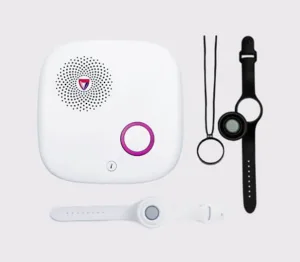
A medical alert system provides you with a button you can push for assistance during an emergency. The help button is usually worn as a pendant or wristband, but you can also place buttons on the walls throughout your home.
A call is placed to a family member, 911, or professional monitoring center within about 30 seconds of pushing a medical alert button. The system's base station — or the button itself — has a speaker and microphone to facilitate the conversation.
Don't worry if you can't think or speak during your emergency. The person on the other end of the phone takes that a sign that you need immediate help. They'll dispatch someone to your home or GPS location, depending on the type of device you're wearing.
How medical alert systems work: Video
Subscribe to our YouTube channel for more videos like this one! Learn how to protect your home, your loved ones, yourself and your belongings.
What are the different types of medical alert systems?
Medical alert systems tend to fall into a few overlapping categories. They can be monitored or unmonitored, at-home or wearable. Each comes with its own share of advantages and disadvantages.
First, let's look at in-home vs. mobile systems.
1. In-home medical alert systems
These types of systems center around a base station with a speakerphone and a help button. Just like the name suggests, they're designed to stay stationary in a central location of the home.
Many in-home systems have a range limit, so users in larger homes may need accessories like additional buttons or wearables to place around the house.
Landline vs. cellular in-home alert systems
In-home medical alert systems use either a landline or cellular connection to place calls when the button is pressed.
- Landline medical alert systems are more affordable than cellular systems and more reliable in remote areas.
- Cellular in-home medical alerts are a little more expensive but usually pair with more accessories, like wall buttons and extra pendants, compared to landline systems.
2. Mobile medical alert systems
Mobile medical alert systems use a cellular connection and battery, allowing users to move independently outside the home. This makes them ideal for seniors who leave the house alone regularly.
Since mobile medical alerts run on batteries, they may need regular charging to keep them working. Many of these systems include GPS tracking technology to help the monitoring center send help in an emergency and keep caregivers updated on whereabouts.
Types of mobile medical alerts
Here are the most common types of mobile medical alert systems (also called GPS medical alerts):
- Pocket base stations pair with the same necklace or wristband button that you'd wear around your home. The speaker and microphone are in the base station, so don't forget to grab it before you head out the door.
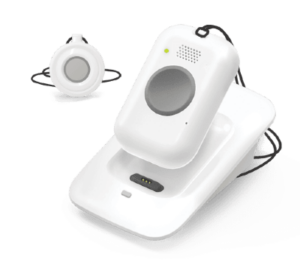
- All-in-one mobile medical alert devices are worn on a lanyard or belt clip. They're lightweight and let you keep track of just one device.
- Medical alert smartwatches include two-way talk and a help button. They're discreet, modern, and usually offer some extra functions like fitness-tracking apps. It's tough to find fall detection in medical alert watches, though.
- Bluetooth medical alerts use your smartphone to make phone calls once the help button is pressed. They have a long battery life (months at a time) but you have to keep your phone charged up and nearby at all times.
Looking for a medical alert device?
What types of monitoring are available for medical alert systems?
Medical alert systems can be programmed to call caregivers, 911, and/or a professional monitoring center.
1. Monitored medical alerts
Monitored medical alert systems link to an emergency call center where professionals can speak to you through the base unit or wearable device. These agents are available 24/7, so there's always someone ready to send for help. They'll talk to you to find out what's wrong, then call for the right first responder. That could be a neighbor, a family member, emergency medical technicians, firefighters, or police officers. This helps conserve local resources and ensures your wishes are honored, like your preferred hospital.
But it costs money to keep all these professionals on-call, so monitored medical alert systems require a monthly fee. Your subscription may include additional perks, such as free spouse coverage, medication alerts, daily check-in calls, and replacement batteries.
2. Unmonitored medical alerts
Unmonitored devices look and work just like monitored systems. But instead of a staff of professionals on the line, the emergency call buttons connect to your own emergency contacts who you pre-program into the system.
While there's no monthly fee attached to these types of systems, they also come with a little more risk.
Which is better, monitored or unmonitored?
We recommend choosing a monitored system.
If your unmonitored system is set up to call a family member, there’s a chance they won’t recognize the number or hear their phone go off. When your device is connected to a professional monitoring center, your call will be answered in seconds, guaranteed.
Plus, the monitoring center keeps a record of your home address along with the code to get into your spare key lockbox. Without this code, first responders have to break down your door. If your device is set up to call 911, you may not feel well enough to share this information yourself.
If you use a mobile medical alert, your precise location also transmits to the monitoring center. They can relay all of this information to the emergency responders who won’t waste any time finding you.
Why can’t I just use my phone?
It’s much easier to push a button than it is to pick up a phone and dial the correct number, especially if your medical emergency leaves you feeling confused or weak.
Plus, a medical alert button is waterproof, so you can wear it in the shower. You definitely can’t do that with your phone.
Why can’t I just tell Google Assistant or Amazon Alexa to dial 911?
These smart hubs can’t call 911 on your behalf, at least not for free. You'll need to sign up for something like Alexa Emergency Assist or Google Nest Aware.
If your medical emergency makes it difficult to breathe, you won't be able to use a voice-activated device. Plus, the smart hub may not hear you depending on where you are in your home. A wearable button keeps help within reach at all times.
Still, a voice-controlled medical alert system is a great back-up option in case you experience poor mobility. Try a medical alert company like Medical Guardian or GetSafe if you’re interested in this type of equipment.
Compare the top 5 best medical alert systems
Brand | Lowest monthly price | In-home range | Backup battery | Learn more |
| $27.95/mo. | 1000 ft. | 32 hrs. | Visit Website | |
| $31.95/mo. | 1400 ft. | 32 hrs. | Visit Website | |
| $29.95/mo. | 800 ft. | 30 hrs. | Visit Website | |
| $29.95/mo. | 1,300 ft. | 32 hrs. | Visit Website |


Data effective as of post date. Offers and availability subject to change.
$19.95 Medical Alert starting price for landline in-home system with annual plan paid up front. Month-to-month plans start at $27.95/mo.
What’s a personal emergency response system?
A personal emergency response system (PERS) is another name for a medical alert system. The name difference recognizes that not all emergencies are medical in nature. A PERS could be used by someone who feels unsafe walking home, for example.
However, medical alert systems can also be used in any emergency. If someone's breaking in, someone's following you, or your house is on fire, push that button!
What is a panic pendant?
A panic pendant is another word for a an at-home medical alert button that's worn around the neck. Some home security companies sell panic pendants that integrate with their own professional monitoring centers, such as:
- Vivint
- SimpliSafe (wall mount only)
- Frontpoint
- Abode
- Ring Alarm (wall mount only)
- Link Interactive
- Cove
Sources
- Falin Wu, International Journal of Telemedicine and Applications, “Development of a Wearable-Sensor-Based Fall Detection System,” 2015. Accessed January 31, 2025.


Recent Articles
Best Medical Alert Systems 2026
We researched the best medical alert systems of 2026 to find reliable options that can...

The Best Fall Detection Devices
Find the best medical alert systems with fall detection. Compare equipment, price, accuracy, customer reviews,...

Jury Finds Meta and YouTube Negligent in Landmark Social Media Addiction Case
Meta and YouTube were found negligent in a landmark addiction case. Here’s why it matters...

How Safe Are the Fastest-Growing U.S. Cities?
Does a surge in population lead to a surge in crime? Find out in our...


